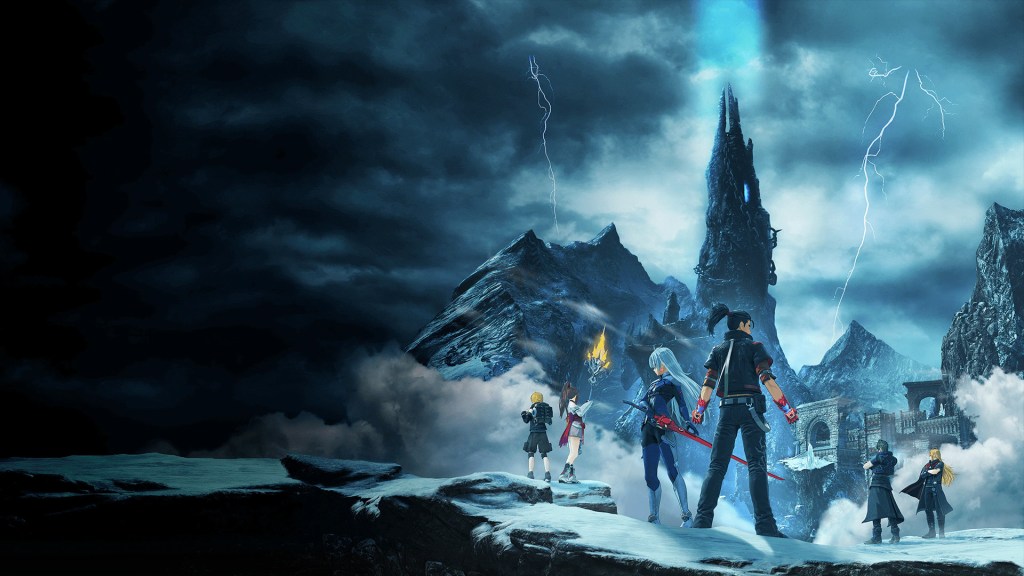
“Out with the old. And in once more with the new…”
This review covers all the content released as of 2.2.0, the most recent update as of writing.
I played the entirety of this expansion in hard mode, and discussion of the gameplay will be written with this in mind.
This review contains spoilers for the entire Xenoblade Chronicles trilogy.
Whereas the main game of Xenoblade Chronicles 3 was concerned with telling a mostly standalone story with some direct but mostly unspoken connections to Xenoblade Chronicles 1 and 2, Future Redeemed requires its players to have beaten the entire trilogy to understand its characters and plot. Despite its status as a prequel to XC3, FR is in essence the true finale to the trilogy that all began with Klaus’s experiment, and looks forward to the future of the series just as much as it looks back to its past.
Gameplay & Music

The scope of the expansion is drastically reduced compared to the main game, clocking in at around 15 to 20 hours, though there is plenty of side content. I did almost every side quest and completed most of the Affinity Goals and my playthrough was about 34 hours long. This time around there are no alternate classes for the main party, which although a shame is understandable, given the shorter runtime. Instead, Affinity Growth takes its place, with a focus on min-maxing the strengths of each individual party member. Art, accessory, gem, and skill slots all need to be unlocked with items found through exploration rather than level ups, and Affinity Goals act as a checklist for the various enemies, items and more you encounter during your journey. The oft-maligned Community system from Torna is back, but this time it’s entirely optional, and works as another incentive to do as many side quests as you can.
These are all steps in the right direction; the shorter runtime makes the heavy emphasis on filling out your Affinity Goals through thorough exploration much more feasible than it would be in a 100 hour adventure. Areas are densely packed with things to do and there are constant incentives to explore as much as you can. Items and enemies you otherwise wouldn’t need or fight will give you AP if you fill out their respective spots in the Collectopaedia and Enemypaedia. Everything you do is tracked and counted towards completion. It’s easily the best progression system in the series.
Characters also feel much more distinct in combat, unlike the main game. This is a given, since the lack of alternate classes forces each of them to stick with whatever Role they’ve been assigned. My favorite character to play as was easily Glimmer, as her constant stream of AOE attacks and healing with consistent buffs/debuffs makes her invaluable on both the front-lines and in support, despite her Healer class.

Unity acts as a replacement for the Ouroboros mechanics from the main game. There are no set pairings- all playable characters can be paired with each other. Even if I prefer Interlinking and the various ways it could be tweaked, Unity is a fine replacement that works best when used as a powerful attack with buffs and Combo finishers, without ever getting as overpowered as Interlinking did.
While the streamlined combat is just as fun as it was in the main game, it’s not without its problems. The lack of class options means you end up using the same Arts over and over, which can make combat feel stale. Fusion Arts having a different bonus dependent on which Arts are fused is a cool addition, but not enough to replace the variety of choice in the main game. Defenders are still pretty bad at maintaining aggro, especially when you have speed demons like Matthew and Rex who dole out Art after Art in rapid succession(Double Spinning Edge is hilariously broken) and end up hogging all the aggro to themselves. I found in most battles that Shulk and Nikol would underperform compared to their teammates; Nikol in particular has no Arts that inflict Target Lock to force enemies to lock onto him, and his damage output is woefully lacking. And by the end the lack of classes or NG+ made repeat playthroughs unappealing to me, not to mention that upon joining your party in the post-game, Na’el constantly messes up your attempts at Unity Combos by not being able to participate in any.
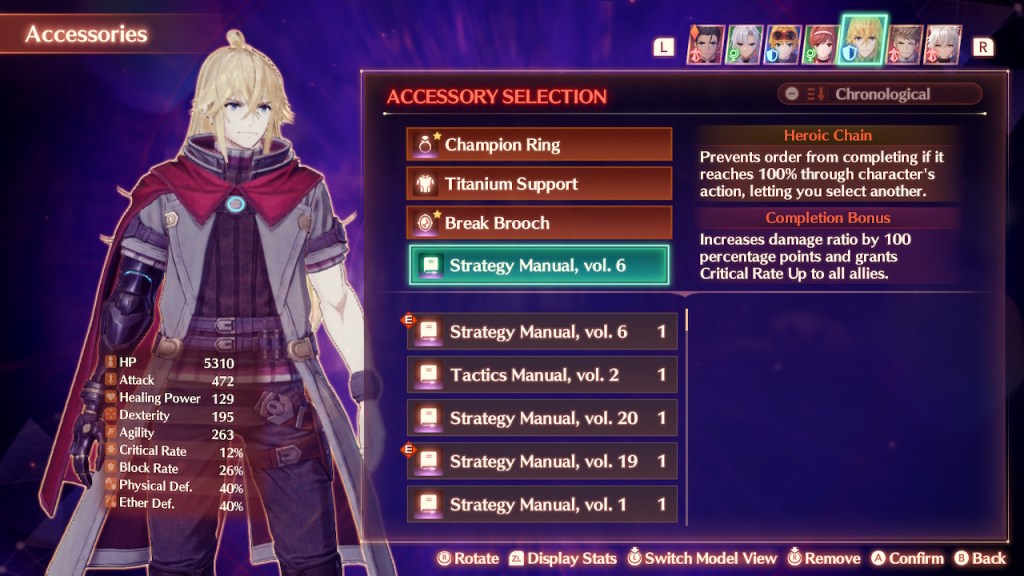
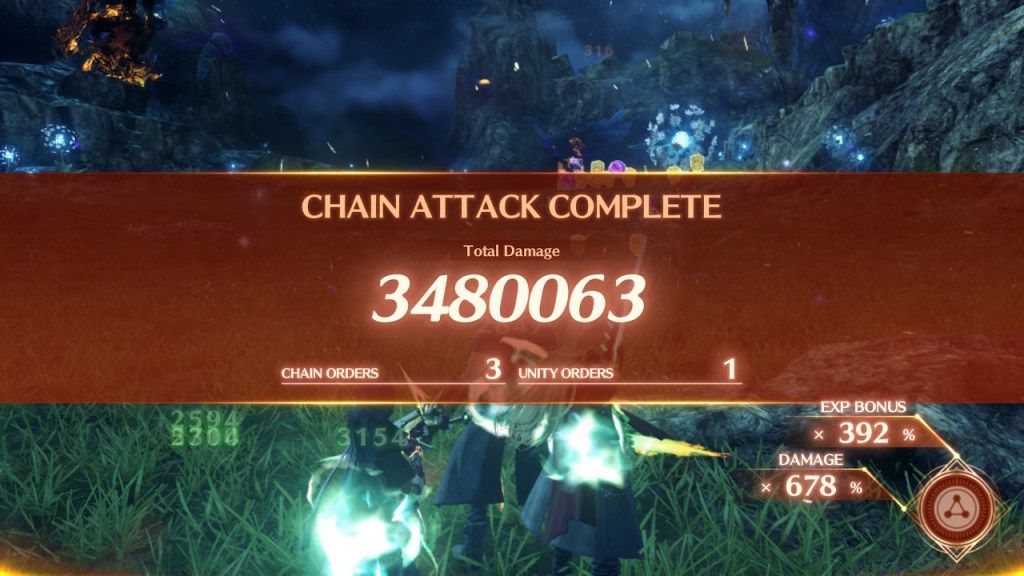
Thankfully, all is not lost for those who enjoy the customization of Xenoblade combat. Manuals are one of FR’s best additions, allowing you to choose your own Heroic Chain or completion bonus with accessories. They give Chain Attacks gain a whole new dimension of strategy and customization. Which helps, since you still can’t speed up or skip Chain Attack animations, and the music for them is the same. Monolith Soft must be very proud of the Chain Attack animations, because they really want you to watch them every single damn time. At least the attack animation for the completion of a Unity Order is quicker than the Ouroboros Order finisher this time around.

Finally, you probably remember how mostly useless gold was in the main game. There just wasn’t enough that was particularly useful to spend it on other than Fabricators or the occasional accessory, and by the end of my playthrough I was hoarding enough unspent wealth to make Jeff Bezos blush. In FR, gold is required to upgrade your weapons, and though it’s still very easy to come by, at least now there’s an actual significant use for it other than collectables and accessories. The same goes for ether, which can now be used to craft slides and lifts to get around with as well as for X-Reader upgrades and Ether Masts, both of which are used to find items and points of interest. All of these small additions collectively go a long way in making FR’s gameplay extremely fun and fresh, despite having already immersed myself in the main game for so many hours beforehand.

It feels greedy to ask for more considering the insane amount of music in the base game, but I can’t help but feel just a little bit let down by the reduced song count in FR. It’s like being served a 5-star meal that’s filling and tastes great at a restaurant you like, then coming back to the same restaurant for a similar meal that’s also delicious but nowhere near as filling. Again, it feels greedy to ask for more, but considering that this expansion expects you to have already beaten the base game, by now you’ve already heard the Chain Attack and boss themes an ungodly amount of times. All the new music is excellent as expected(the night theme for the Cent-Omnia Region is a new favorite area theme for me, and Future Awaits stands as one of the best vocal tracks in the series), but just a few more tracks would have gone a long way in reducing my fatigue towards the song repetition.
Story & Themes
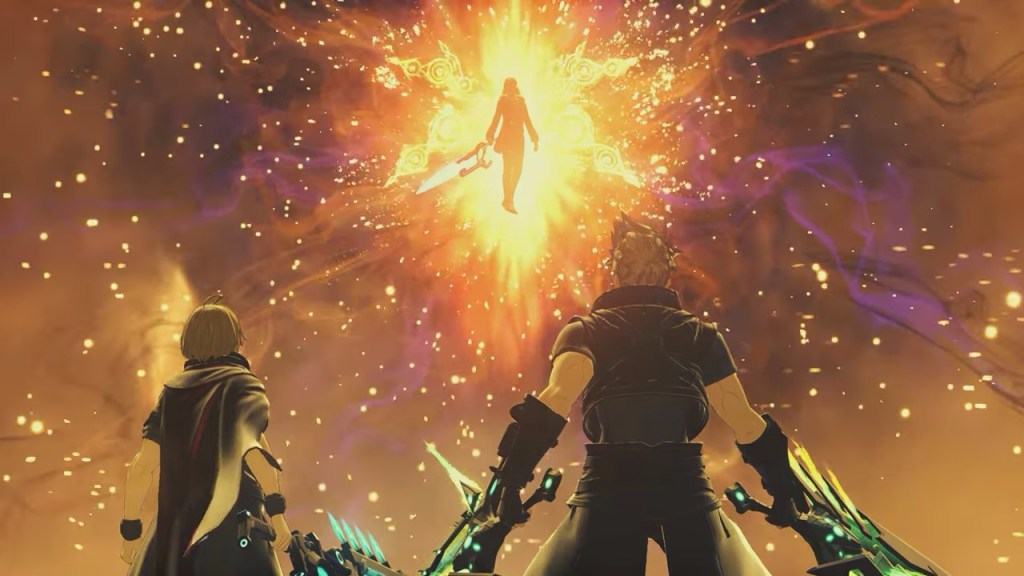
Future Redeemed’s story is the bow that ties together and completes the themes of the main game, while ultimately capping off the Klaus saga and leaving the door open for possible future continuations. As the player is expected to already know the story of the trilogy up until this point, much of the exposition and table-setting typical to these kinds of story-heavy JRPGs is skipped, allowing the story to directly and quickly focus in on the Alpha conflict(A little too quickly if you ask me, but we’ll get to that).
What makes Alpha interesting is how he represents the extreme of what the Ouroboros from the main game strive for. Ouroboros sought to destroy the world and systems that would hold them back, believing in and looking forward to an uncertain future. Alpha takes the same idea and pushes it to the extreme, choosing to completely abandon the past for the sake of the future. This puts Alpha in direct opposition to Moebius, N specifically, who desperately clings to the past while forsaking the future. They both operate with absolute bias against each other’s viewpoints without understanding that neither the past nor the future can exist without the other, something Matthew eventually comes to realize. Both extremes end up accomplishing exactly what they try to avoid; N wants to relive his past, but ends up destroying it. Alpha wants to abandon the past, but by abandoning it the mistakes and sins of the past are only repeated.
This simultaneous focus on the past, present and future is why I love Shulk, Rex and A’s inclusion in FR so much. Sure, it’s very obvious and very loud fanservice, but it still feels natural for what the story is trying to say. This game is all about legacy, and who better to include than the 3 Xenoblade characters with the biggest legacies of them all? We can’t move forward without looking back once in a while, after all.
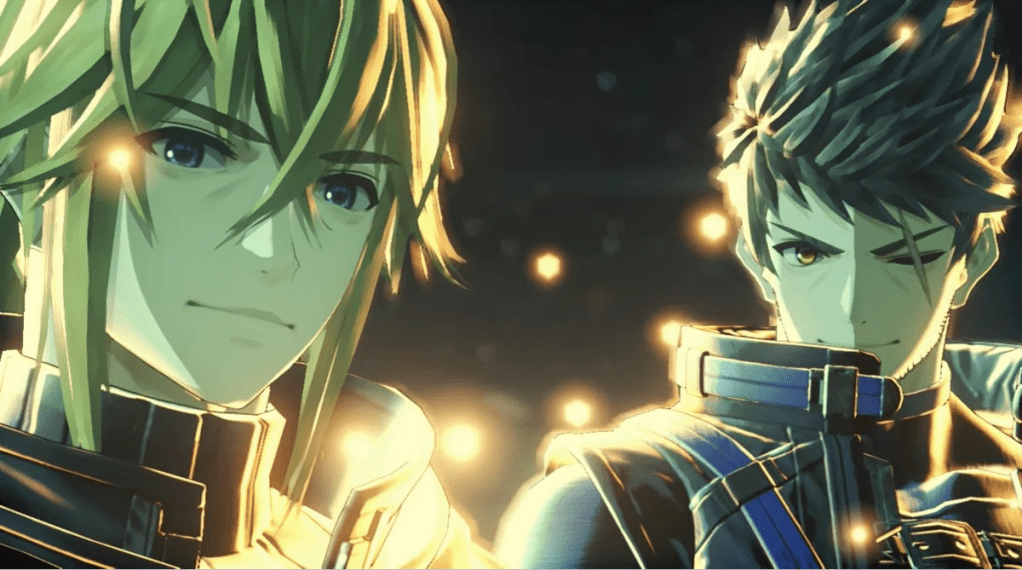
I really can’t overstate how good it feels to see and play as Shulk and Rex again. They fit so naturally into their roles as mentors to the rest of the party, having been through so much that has made them grow as people already. They carry a storied history with them that only they(and A!) are aware of, yet those experiences still compose them and push them forward regardless.
This is why I’ve come to appreciate the choice not to specifically name any of the absent party members from XC1 and XC2. Though they’re no longer with Shulk and Rex, the impact they’ve left behind on the both of them is, even if their current companions are only vaguely aware of it. That alone is far more meaningful than simple namedrops or cameos. This kind of restraint is what makes the fanservice in this expansion much more tasteful than what’s typically present in other long running franchises with big casts.

This much reflection on the past is what makes Matthew’s inclusion as a protagonist interesting. A lovable himbo and a departure from the typically more reserved protagonists of the series, he’s the only playable character with no stake in any events or pre-existing relation to anyone from the previous games. Yet this choice to keep him divorced from everything that came before Aionios is what makes him work so well. He carries on the legacy of those who have come before, building a future along with the other founders, even if he doesn’t fully understand everyone or everything that precedes him. Shulk, Rex and A keep the past alive, while guiding Matthew as he carves a path to the future alongside them.

It’s unavoidable considering how short the expansion is, but the pacing is very quick. This has both positives and negatives; On one hand, something important happens in nearly every cutscene, and the story never felt padded out. On the other hand, some parts of the story do feel a bit awkward- Nikol needing a break twice within the span of only a few cutscenes and Alpha conveniently showing up immediately after the lore dump at the end of Chapter 3 being the most egregious of them all. Nikol and Glimmer also suffer from the speedy pacing, as neither gets much development or neat character moments. This stopped their choice to stay with the party to fight Alpha in Chapter 4 from being as resonant as it could have been, as their desire to stop Alpha isn’t as personal or built-up as it is for everyone else. When everyone else in the party is so interesting or memorable, they stand out as the only ones that aren’t. Their interactions with Shulk and Rex are touching, but that’s all I really have to say about them.
Another problem I had with FR’s story is how disconnected FR feels from the story of the main game. On one hand, the statues of the Founders in the City essentially spoil their fates at the end of FR, showing that FR’s story was at least marginally planned out alongside the main game’s. But on the other hand, Shulk and Rex’s statues say they fought Moebius instead of Alpha, who is never mentioned or alluded to at all in the main game. Yes, it’s still a thematic response to the main game, and works very well when viewed in that regard, but it doesn’t recontextualize as much as it could have in the way that all the best prequel stories do. Whereas characters like Jin/Haze/Mythra etc. were greatly enhanced by their appearances in Torna, none of the characters from the main game get anything- save for one.

The one exception to this exceptional strangeness is N, who greatly benefits from his appearance in Future Redeemed. In the main game, we mostly saw his attack on the City from M’s perspective. Disgusted and horrified that he would slaughter their very own descendants to turn her into Moebius, she saw in him a monster and a shell of the person she once loved more than anything. She would be right of course, but what N didn’t tell her was that he wasn’t doing it solely for her sake, but also to stop Alpha from taking the people of the City to a new world and erasing everyone else in Aionios from existence. The tragedy of N’s choice is enhanced even further, because he never really had one to begin with.
This all comes to a head when he unintentionally kills his son Ghondor, in one of the most moving scenes in the entire game. The utter shock and despair Ghondor feels in seeing his father again as Moebius is palpable, and the way N’s voice shakes as he claims the burden is his alone to bear before saying Ghondor’s name is chilling(Harry McEntire absolutely kills it once again). When Ghondor sacrifices himself and passes the torch to Matthew and the rest of the younger generation, it is the opposite of N’s choice and stands as a testament to the path he could have walked, if only the allure of eternity hadn’t ensnared him in its grasp.

This was the moment that truly broke N, forcing him to desperately cling to hollow affirmations just so he could lie to himself and justify his choices. He allows Matthew to slug him during their Prison Island confrontation, because deep down he knows what he did was wrong and he deserves to be judged for it. He never tells M the whole truth, because he chooses to carry the burden all alone, out of pure self-hatred and guilt.
Of course, not all is lost. The pain of killing Ghondor as well as his choice to ally with the founders to stop Alpha(and also not kill them after defeating Alpha, what a nice guy) plants the seeds for his characterization in the main game, and the eventual birth of the Noah we play as, the embodiment of his hope. N and M’s sacrifice at the end of the main game now hits even harder, because it means N was finally able to make the same choice his son did all those years ago.
This of course doesn’t absolve N of his sins at all. Even if it was for the survival of the world, he still murdered countless innocents for the sake of stopping Alpha and bringing back Mio. But FR does an excellent job at humanizing him further, showing how exactly he became the embodiment of regret and elevating an already great character to one of the best in the series.
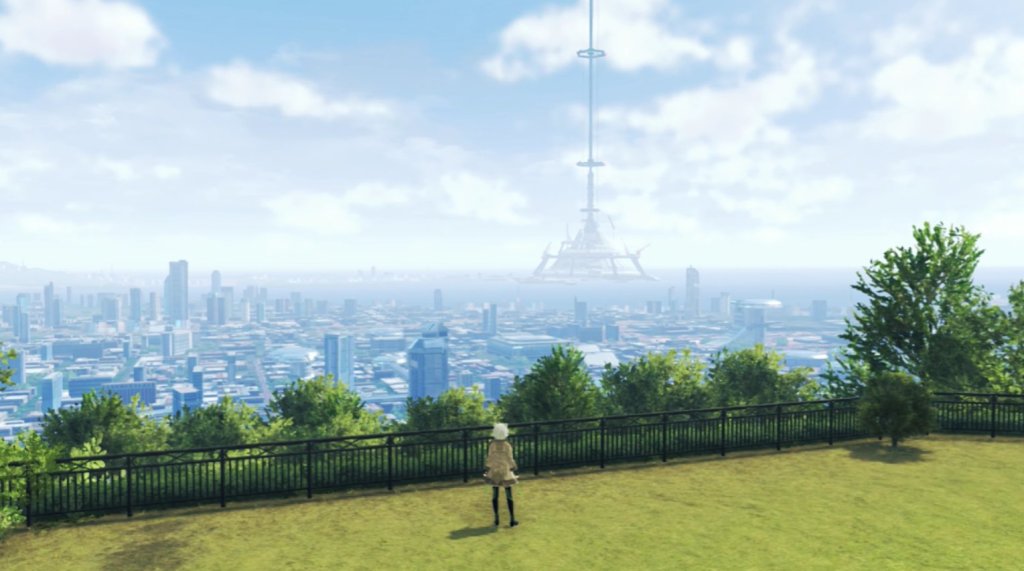
As for the now infamous radio scene, there’s not a whole lot I can say about the radio itself- The only games in the Xeno series I’ve played are the ones in the Xenoblade trilogy, and I want spoilers to stay firmly in Xenoblade territory. But the implications of this scene are not lost on me. As I understand it, the radio scene establishes connections to Xenogears, Xenosaga, and Xenoblade X, though I’ve been told only Xenosaga can canonically link with Xenoblade without any major contrivances or retcons, and the references to Gears and X are most likely just nods to them. This is even more significant when you realize the final shot of FR is similar to a certain scene from Xenosaga Episode III, and Bandai Namco is included in FR’s credits, as well as being included alongside Xenosaga in the intellectual property information for XC3 after FR’s release. Could this possibly mean some kind of Xenosaga revival or continuation? Your guess is as good as mine even now, a year after FR’s release.
What I can say is that I’ll never forget just how jarring it was going from the fantastical Aionios to an American suburb in mere moments. It’s such a bold way to start the final chapter, and a great segway into the scene with Na’el and the radio. One of my favorite details is the news on the radio talking about a human rights bill not making it while Na’el tries to claim the place is a paradise. Right from the start it feels too good to be true, something is off and Na’el doesn’t want you to question it at all. She wants to climb the World Tree and forget the past, let go of her roots. This is of course exactly what destroyed Klaus’s world. Ground without roots to hold it down will eventually be washed away, and without a foundation, efforts to build a better future will end in bitter tears and gnashing of teeth.

Bionis/Mechonis, Alrest and Aionios are all precarious worlds born from tragedy, worlds that are essentially massive lived-in graveyards that are either dying or already dead in some way. They are ravaged by cruel gods/blades/sentient supercomputers who wish to decide the fates of their respective worlds for themselves, robbing the people of the right to choose their own. It’s human nature to want what you don’t have, to seek something more than yourself. To desire to change the world. But when desire spirals out of control, well, we’ve already seen how the desire of one human scientist brought an entire world to its knees.
This ties back into the themes of fully living in and being content with the present that were more prominent in the main game. Noah wanted to be able to fully enjoy every moment that was available to him and smile when it was all over, content with his life and what he left behind. The endless now stood in the way of that, and thus he chose to destroy it. His descendant Matthew goes down a similar path, choosing to acknowledge everyone and everything that has come before him, because without them, he wouldn’t even exist, and a path to the future would be impossible. Alpha stands in the way of that, and because of that he has to go.
This may make Noah and Matthew sound no different from Klaus, Z or Alpha, as they too wanted to change the world, but the key difference between them is that the worlds that Alpha and Z aim to create are narrow and stifling, built upon the involuntary sacrifice of the many for the lucky few. Klaus may not have meant to destroy his world, but his choice to kickstart the experiment was born out of a desire to escape the ruin of his world, rather than a desire to fix it. Instead of moving forward and learning from humanity’s mistakes, they were only repeated. Noah and Matthew don’t want to change things to compensate for their own shortcomings. They don’t want to surpass the natural cycle of life or abandon those in need for an endless now or a new world. They just want to create a world where people can be content. Where they can earnestly smile despite the limited time they have.
The choice to play Z’s theme when Matthew rejects his absorption by Alpha seems very intentional to me. Don’t completely deny the Moebius inside you, but don’t let it control you either. Learning from the past, savoring the present, preparing for the future. Knowing when to strive for more, and when to be content. A balance between the Ouroboros and Moebius within us all. That is how you can change your destiny. All must be considered to make the world a better place.
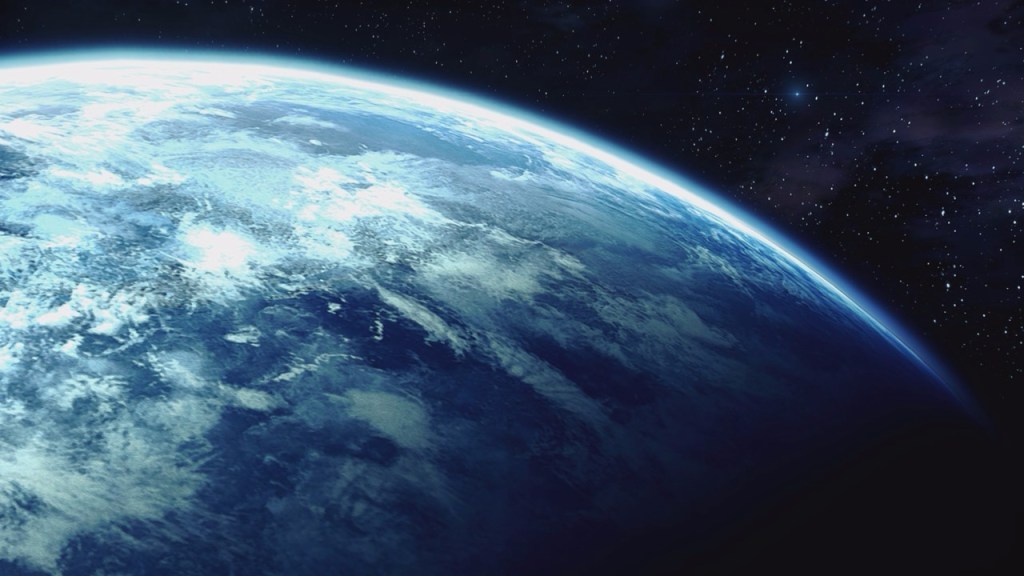
And of course, the final scene of FR shows us that the world has become one once again. We may not know what this unified world is like, but I’d like to believe it’s one where all life will walk toward the future, hand in hand. We’ve certainly been given reason to believe that’s the case. Alvis could see it, clear as day, after all.
Future Awaits

Whereas Torna feels like an essential part of the XC2 experience, Future Redeemed doesn’t change my feelings toward XC3 that much. This may come as a surprise, considering how much time I just spent praising it. But I already felt that the ending of the main game was a perfect conclusion to the trilogy, and was completely satisfied despite how much it left open and unanswered. In this way, FR is more like a nice bonus and an addition to the Xenoblade 3 experience that I’m glad exists, but not something I’d lose sleep over if it didn’t. This isn’t a bad thing. I still really like FR and what it has done for the series. But it relies on prior investment in the series so much that it lacks novelty and surprising moments(save for the radio scene, kinda). There’s not much in it that moved me anywhere near as much as the experience of the main game did.
In spite of this, it works incredibly well as a reward for sticking with the entire series to the end, and is a strong conclusion to the story that started in XC1. Even after the recent release of XC3’s artbook, we still have no solid idea as to where the series will go next, and I think that’s more exciting than anything. My personal hope is that the series doesn’t stay in the same universe solely out of obligation, as its story feels complete to me. I would be completely fine with the next game being divorced completely from the unified world shown at the end of FR, if it meant the series could continue to try new things and explore fresh ideas. And if it does stay in this world, I hope that it takes place in a future so distant that the events of the previous games are remembered solely as myth or legend. The past is important, and must be remembered, yes, but I want this series to continue to look to the future and embrace change, as it always has.
“Nevertheless, our intentions will live on, and one day coalesce again. Be it tomorrow… or in a thousand years. Surely, the time will eventually come. I can see it, clear as day.”

 Man of Few Worlds
Leave a reply to worldlywoes369 Cancel reply