
“If the world holds our lives back, I will end it! It’s as simple as that!”
This review covers the content released as of 2.1.0, the most recent update as of writing.
I played the entirety of the game in hard mode, and the gameplay section of this review is written with this context in mind.
I have not played Xenogears or any of the Xenosaga games, so while I am aware of many of Xenoblade 3’s allusions to them, I will not be discussing them in detail.
This review contains spoilers for the entire Xenoblade Chronicles trilogy.
Worlds Collide
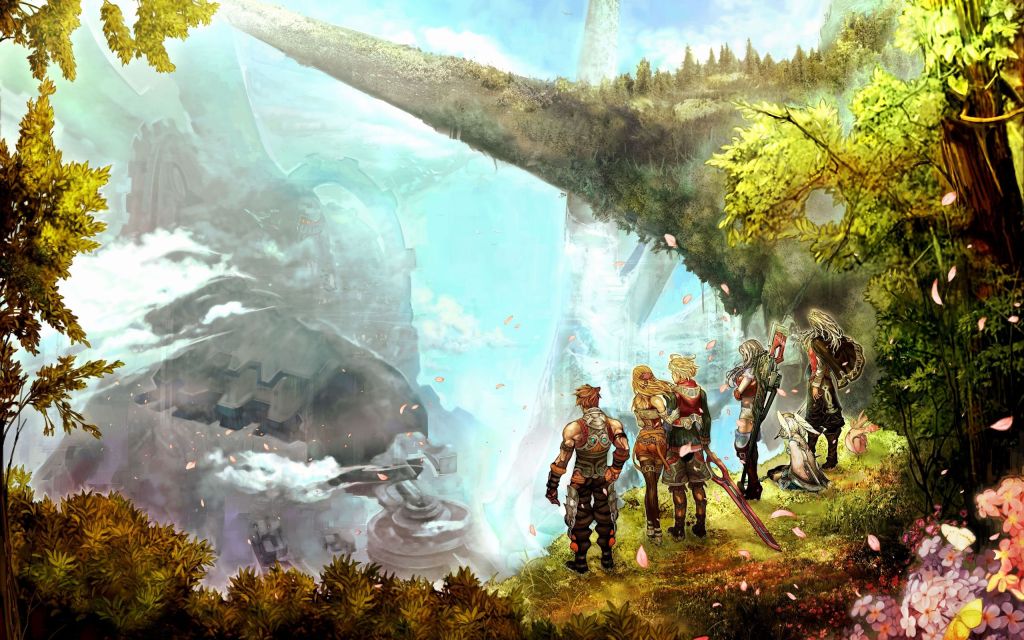
My first exposure to the Xenoblade series was in 2013, back when it was a singular game that had come dangerously close to missing a Western release entirely, relatively niche and for a console that was, albeit absurdly successful, on its way out. What I’d seen and heard about it intrigued me; it looked unlike any other game I had seen before, and I just had to try it out for myself. The push for a North American release by Operation Rainfall only sparked my interest in it further. What was so significant about this game that, against all odds, would make a group of dedicated fans campaign for it(alongside Pandora’s Tower and The Last Story) so fervently despite Nintendo’s initial lack of interest in a NA release?
Looking back on it now, I wonder what I would have thought, had I known how important it would become to me… once it became a part of my world.
Xenoblade Chronicles was in a lot of ways a gateway into the JRPG genre for me. I had had little exposure to it by that point outside of Pokémon, so it introduced me to a new world of the gaming sphere I would eventually come to love. Even now, there are few stories that truly captivate me and capture my imagination like the first Xenoblade does. The world of the Bionis and the Mechonis is a fascinating and unforgettable one, and the same can be said for its lovely cast of characters. Shulk’s journey to defeat the Mechon and eventually Zanza is one that has stuck with me for a long time, and to say my experience with it was formative really can’t be overstated; it shaped my taste in media to such an extent that even now, close to a decade later, I’m constantly noticing the numerous similarities it shares with many of my other favorite worlds and stories. It’s easily one of my biggest influences as a creative, and I imagine it will continue to serve as a major source of inspiration for my work for years to come.

So of course any follow-up to it would have huge shoes to fill. I never played Xenoblade Chronicles X, so I can’t comment on it much beyond, “I sure wish Monolith Soft would free it from Wii U jail so I can play it, but they’re probably just going to do a sequel instead and Nintendo doesn’t care about media preservation anyway.” I did play from start to finish, however, Xenoblade Chronicles 2, and its DLC expansion, Torna – The Golden Country. I have a lot of complicated and conflicting feelings on XC2, too many to do justice to in just a few sentences, but I think I can say with some confidence that I like it overall, despite its many questionable design choices. It’s a game of high highs and low lows, and what it gets right I absolutely love. What I can say with even more confidence, however, is that I quite like its DLC. When I’m feeling extra charitable, there are some days when I like it even more than the base game. Torna does an excellent job of fleshing out the history of Alrest and its characters, and fills in the gaps of Jin and Lora’s story left open by the base game quite nicely.
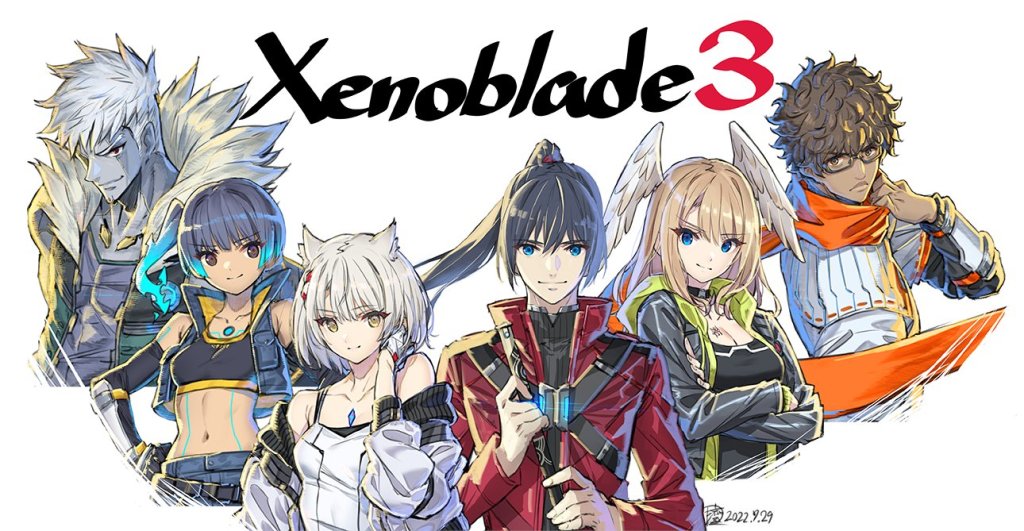
So, after a several months-long playthrough clocking in at 150 hours(180 if you include my time spent fooling around in the postgame), how does Xenoblade Chronicles 3 stack up to the other numbered entries in the series? Following up two games as massive and ambitious as Xenoblade 1 and 2 is a tough act to follow, especially as the finale to the trilogy that all started with Klaus’s experiment.
The ending of XC2 as well as the epilogue story expansion Future Connected from Definitive Edition were satisfying conclusions to their respective stories, yet were both ripe with potential for future exploration.
What would become of the people of Alrest, now that the Titans have merged together with a larger landmass and seemingly solved their land problem? Would Melia’s ascension to Empress of the surviving High Entia usher in an era of peace for the people of Bionis and Mechonis? The answers to both of these questions are… complicated. Uncertain. One could never blame the people of either world for fearing what could come next. And if there is one thing that humanity fears above all else, it is the unknown…
Bold, ambitious, and fiercely relevant to the now, Xenoblade Chronicles 3 is a testament to Monolith Soft’s 15 years of experience working on the series. It is in many ways the culmination of the gameplay, storytelling, and themes of the trilogy, and is easily my favorite gaming experience of 2022.
Gameplay
- Combat and Character Customization
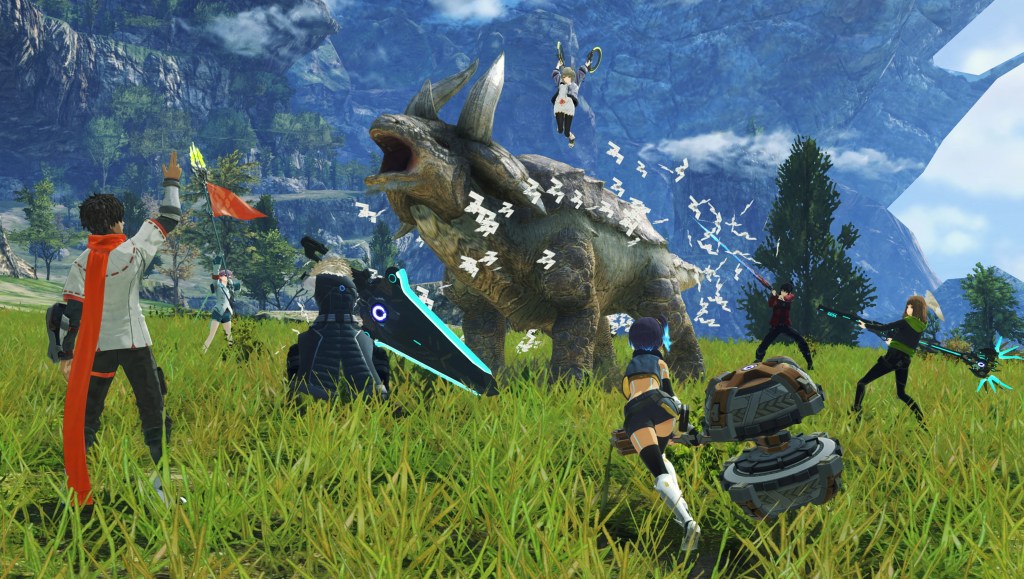
In line with the linking of the worlds from the previous 2 games, XC3’s gameplay combines several aspects from them both. Combat in particular takes many pages from XC2’s book, but is much more approachable this time around, despite how complicated it may look to a series newcomer. The same MMO inspired blend of real-time action and turn-based strategy with an emphasis on timing and character positioning is still there, but it removes a lot of the bloat that made XC2 difficult to get into for me and many others. The biggest and most noteworthy changes to the formula are the adjustments made to the returning Class system, and the addition of the Hero and Interlink systems.
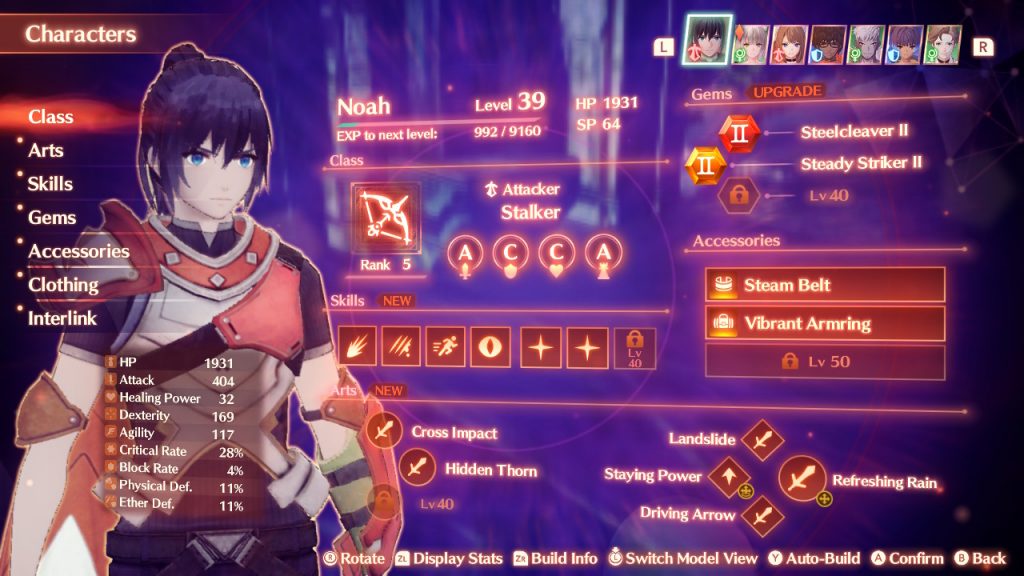
Classes in XC3’s gameplay function similarly to the basic, one-Blade classes from XC2, renamed to Attacker, Healer and Defender. Also similar are the Heroes, a natural evolution of the Blade system, mercifully free of any gacha elements this time around. While the way Blades are explored conceptually throughout the story of XC2 compelling and thought-provoking, it doesn’t really change the fact that Blades are, in both concept and execution, incredibly video-gamey. They’re a bunch of ridiculously overdesigned glorified Pokémon that will immediately do your bidding and help you in battle once you summon them from crystals. In XC3 however, Heroes are encountered as a natural part of your journey, the leaders of the Colonies and other allies in the fight against Moebius. Most of them are encountered during the main story of the game, though some are optional. Classes are inextricably linked to the Heroes you encounter across Aionios, as their classes can be inherited amongst the party. Each of them has their own dedicated Hero Quest which will unlock their class for use among the party, and as a guest 7th party member that can participate in combat.

Classes inform the Arts and Skills you can use, and when paired with different gems and accessories, there are a dizzying amount of different combinations. XC3 does a good job at incentivizing you to try out as many classes as possible, since the more class ranks you earn the more bonuses that carry between all classes are unlocked, such as Master Arts, Talent Arts and Skills. Fusion Arts in particular were one of the most enjoyable parts of combat for me. One of my favorite mechanics in JRPGs that have them is permanently learning an ability after fulfilling the necessary requirements, and then pairing it with other learned abilities for a desired effect. Fusion Arts fulfill this niche quite well, as the Master Arts you learn can be paired with the various Arts in whatever class you’re in. I like pairing Arts that complement each other in various ways, such as two healing Arts for double the healing, an attack buff with an Art that inflicts Physical/Ether Defense Down for extra damage, or an Art that lowers enemy accuracy with one that buffs the party’s evasion. Beyond just customizability, Fusion Arts make moment-to-moment combat strategic, since depending on whether they’re Kevesi/Agnian/City Arts they have to be charged in different ways and must be managed carefully to maximize your Interlink level increases.
While the expansive options and customizability makes combat consistently fun and engaging, one problem I had with it was that every playable character felt kind of samey. When every character can be assigned to any class without many noticeable issues, they all start to blend together in terms of game feel. While it is true that having greater or worse affinity for a class affects how long it takes to unlock, all it really does is slow progression down. XC3 in general has a pretty piecemeal approach to unlocks, which is fine as a long game that gives you a lot of time to unlock stuff, but a more interesting way of distinguishing each character through bonuses and penalties for using classes with roles they do or don’t have an affinity for would have been appreciated.

Interlinking is an interesting mechanic that, like the rest of combat, increases in complexity and versatility as the game goes on. While it may at first seem like nothing more than a superficial power-up, there are numerous useful applications for Interlinking beyond just big damage. It’s especially effective as a defensive option to evade attacks, as the lack of a health bar stops you from taking damage until the Interlink ends. The Switch command also has more uses than you would think, as it removes a lot of the lag for your actions so you can charge your Talent Art or switch targets faster. Though the amount of Arts you can use while Interlinked has been drastically reduced, each of them has an incredibly strong effect that can’t be found in any of the classes, such as extending the duration of Break/Topple/Launch/Daze, boosting the power of active buffs, or reducing the damage taken by all allies for a set period, and many of them can be paired with each other in fun ways. Level 3 Interlinks are also great for getting a Combo started, since you can use Phantom Slash and Full Moon Drop multiple times against stronger enemies that usually have good Break resistance, instead of having to wait for your Break Arts to recharge when you aren’t Interlinked.
But in a game so dead set on giving you as much control over your characters as possible, it’s a bit strange that the option to manually choose when to Interlink isn’t the default option from the start. AI-controlled party members will constantly Interlink before they reach Level 3, resetting the level and your chance of using their Talent Art. Sometimes it stops them from getting killed, while other times it takes a big dump all over whatever strategy you had planned. I also think Interlinking takes a while to get particularly useful for offensive purposes, and when it does it gets almost too powerful. Early on it’s quite difficult to use an Interlink Talent Art or reach Level 3, as you can’t cancel Arts(while Interlinked) and don’t have many Master Arts to fuse. But once you unlock Art Canceling, carefully timing your Arts and cancels to charge your Talent Art is no longer needed, as the lack of a cooldown on your Arts means you can just spam them for an easy Talent Art(or 2, or 3 if you’re fast enough). It’s certainly amusing to immediately Interlink at the start of a battle and wipe the floor with weaker enemies with an endless barrage of Bounding Ends and Wing Smashes, though I can’t deny that it feels a little cheap.
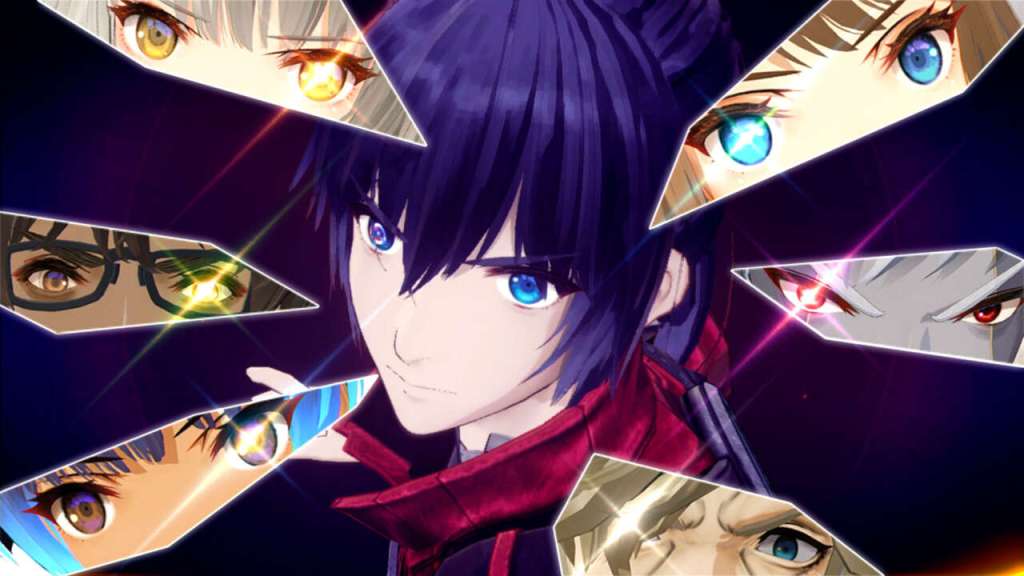
Chain Attacks have been reworked significantly from the previous games, with a focus on completing Chain Orders and maximizing TP gain to keep the Chain Attack going while doing as much damage as possible. It initially seems daunting, as there are multiple overlapping systems to consider simultaneously, but is actually much easier to grasp than you would initially think. It’s a very powerful mechanic that’s strategic enough without being overly complex, and is immensely rewarding to pull off once you get the hang of it. The loop of trying to get as much TP as possible before ending the order while factoring in Chain Abilities and Heroic Chains is incredibly fun, and ending with a successful Ouroboros Order after using as many Chain Orders as you can is super satisfying. It combines the best of both worlds of Chain Attacks; The tactics of choosing the right Arts one after the other from XC1 as well as the big damage and planning of XC2. You also have the option to use buffs and Combos like you could in XC1, and there isn’t really a convoluted learning curve like in XC2. There are so many ways you can tackle Chain Attacks in XC3, and I had a great time exploring them.
That said, I hope you enjoy Chain Attacks as much as me, as if you use them you’ll be spending a lot of time actually executing them. Chain Attack animations are long, especially the finishing attack that completes an Ouroboros Order, which can take nearly a full minute to finish. I almost wrote a section describing how sad I was that you can’t target another enemy after finishing one off in a Chain Attack like in XC1, only to realize that would just drag them out even longer. Chain Attacks in general are very long, and I wish the animations could be sped up or skipped entirely. It makes me miss how short and sweet Chain Attacks were in 1, despite how RNG-screwy they could be. Chain Attacks in XC3 rely on RNG too because of random Chain Orders, but not getting the order you wanted thankfully never feels quite as bad as your Chain Attack ending prematurely because RNGesus said so.
Another change I’m not sure was for the better is that the Party Gauge is no longer tied to the revival of party members like it was in XC1 and XC2, which makes Chain Attacks risk-free so long as you don’t mess them up. I played the game on Hard, so Chain Attacks are a bit harder to pull off and do less damage, but I imagine they’re close to, if not outright an instant win button against most enemies on Easy and Normal due to the insane damage you can pull off with them. And lastly, I’ll be hearing the Chain Attack theme in my nightmares from having to listen to it so much. It’s unfortunate that it interrupts the music in every single fight except for the final boss.
In case you were wondering, my max TP was 543, and my highest Chain Attack damage was 2,625,974.
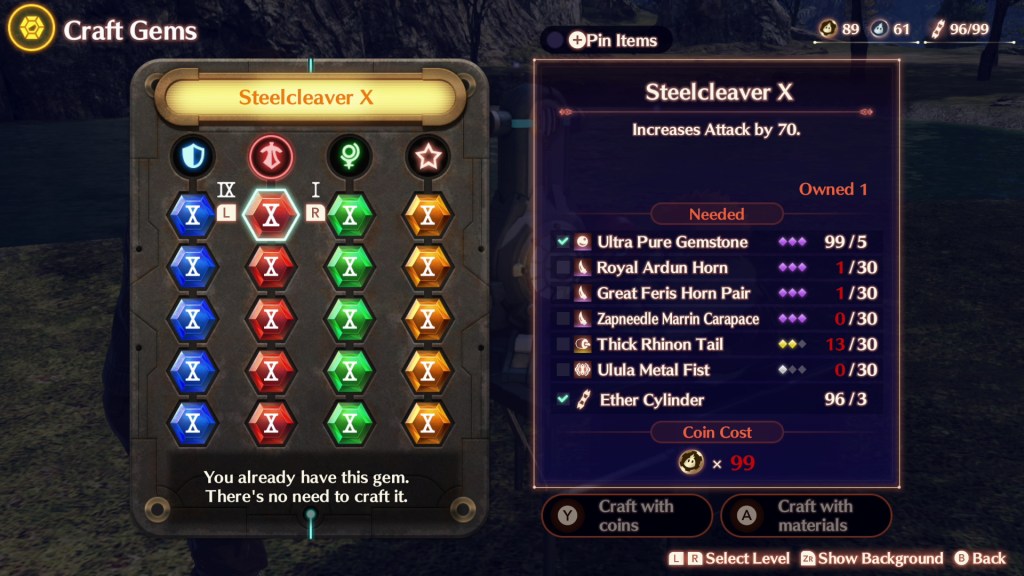
The gem crafting system from XC1 returns, albeit in a simplified form. Gone are the convoluted systems of Heat, the Cylinder Gauge, and Shooter and Engineer abilities; in their place is an easy to use Ether Furnace that only needs collectable items, Ether Cylinders and Nopon Coins to craft or upgrade gems. Gems are also no longer crafted into individual equippable items. They’re instead shared universally between the party(and Heroes in postgame and NG+). While the satisfaction of successfully crafting a high quality gem has been reduced, in its place is an easier and much less confusing way of customizing your builds, with an Ether Furnace that can be taken anywhere from the start without needing the completion of a quest to do so.
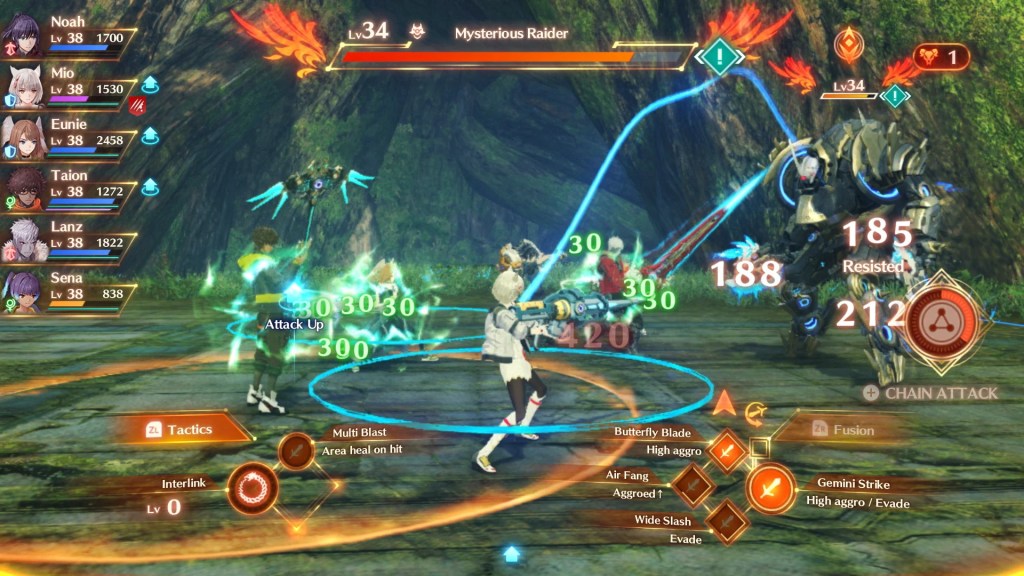
Being able to switch between playable characters freely is easily one of the best new additions to XC3’s combat. Party member AI in these games has never been perfect(I’m looking at you XC1 Melia), so having the option to simply take control of them at any time in battle is incredibly freeing. It’s similar to Switch Arts from Torna, but without any cooldown this time around. To me, this is a feature that should have been a part of these games from the start, so I’m glad it’s finally here. Speaking of long overdue options, Quick Move is also a godsend. Character positioning is key in these games, and being able to dash quickly to a favorable spot in battle is a lifesaver in most situations, especially with the addition of field effects that require characters to stand in certain spots to gain their effects. And once you learn The Art of Flow from Juniper, combat only gets smoother as you can cancel Arts into each other without using Fusion Arts. The fast flow of combat, whether it be through a combination of Art canceling, switching characters and moving around quickly made it feel like a true action game at times.
Lastly, some miscellaneous criticisms. Expert Mode was one of my favorite mechanics from XC:DE; I could scale down my level whenever I wanted to tweak the difficulty of enemies to my liking, and then bring it back up whenever I wanted an easier time. It’s a great QOL feature that I wish more RPGs had, and it’s a really weird choice to lock this game’s equivalent behind postgame/NG+, even more so when this game already lets you store bonus EXP(that you can only level up with) that can be added later like in DE. It also resets your EXP whenever you use it. For example, if you switch from level 60 with 5000 EXP to level 30, the 5000 EXP will disappear and you’ll have to earn it again. It’s just very odd to tweak a mechanic that worked just fine already like this.
Targeting enemies is pretty wonky, and is especially egregious as there are higher enemy counts and a lot more going on screen than the previous games. If you’re fighting several enemies at once, there’s a good chance you’ll accidentally switch to a random enemy off in the distance instead of the ones you’re fighting right in front of you. It’s pretty bad, and can definitely screw things up quickly in difficult fights. An easy fix would have been to simply prevent you from locking on to enemies that are a certain distance away from you while in combat.
A balance issue I noticed is that Agnian Arts consistently charge faster than Kevesi Arts, even when you speed up their cooldowns with Troubadour Arts. The amount of Auto-Attacks required to fully charge an Agnian Art almost always takes less time to execute than the cooldown timer on Kevesi Arts, despite them not even needing any input to recharge. It makes me wish there was some kind of accessory or skill that could make Kevesi Arts charge faster.
You rely on Break to Topple to Daze/Launch to Burst/Smash a lot throughout XC3. This isn’t a bad thing, as Combos are an essential combat tool that you can get a lot out of, and the new Burst status is an extremely useful option for surviving the Enraged phase of Bosses and Unique Monsters. But I still think another Combo route would have been just a little bit better at making Combos feel more varied.
Stronger enemies have the awful habit of using extremely powerful AoE attacks that wipe your party and are almost always guaranteed to kill your Healers. Few things invoke gamer rage in me as much as carefully planning and executing a strategy for a fight that lasts 15 minutes, only for the enemy to hit me with an attack that annihilates my Healers, dooming my chances of winning in an instant. And some Bosses and Unique Monsters like to use these attacks a little too often. If a strong enemy targets your healers, there just isn’t enough that you can do. It’s really frustrating, especially when Defenders just aren’t that great in this game, as their aggro-pulling Arts aren’t super effective at keeping enemy attention most of the time, and there are only 6 Defender classes out of 27 classes(Shulk doesn’t count since his class can’t be inherited by the base game party).
AI for party members is pretty good in this game, but it’s not without its issues. I despise when party members stay far away from the rest of the group during a fight, which is particularly bad in fights with large enemies, as your AI allies will run to the ass end of the map to fire off positional Arts or just do their own thing, not realizing that it may not be a good idea to be far away from your Healer while they cast healing Arts that require them to stay relatively close to do anything. You’d think the command Follow Leader would remedy this, but when activated, it causes every character you aren’t controlling to stop attacking. I get why it’s designed like this; it’s meant to prioritize getting your allies to the player character as quickly as possible without interruption. But some kind of option to keep your allies close while still attacking would have been way more useful. The AI also has absolutely no idea what to do in fights near ledges; it’s hilarious seeing them run in circles and into walls trying their best to help without walking up the ledge that’s right next to them.
I love Xenoblade combat to death, but it has always had some degree of jank ever since the first game. XC3 makes many improvements and great additions to the formula, while carrying over some of the unfortunate design flaws of the previous games. It’s part of the charm at this point, and I still managed to have a great time with it regardless. Even in the postgame, I’m still finding interesting loadouts and fun optimizations for my party. As a bonus, these are some of my favorite loadouts I cooked up during my playthrough:
A particular loadout I enjoy is putting characters in classes with Arts that inflict Blaze damage like Seraph and Yumsmith, equipping them with Accessories that increase Blaze damage/damage against enemies inflicted with Blaze, and then pairing them up with characters in classes with Bleed Arts equipped with similar accessories. It’s a very effective way of shaving away the enemy’s health on top of the damage done from Arts and Auto-Attacks.
Another is shortening Auto-Attack intervals as much as possible with Gems so Signifiers can activate constant buffs for the entire party. Pair that with Heal Harmony’s regeneration field and at least one Troubadour using Arts that speed up Art recharge time, and your party will have constant buffs and near endless healing at almost all times.
- Exploration & World Design
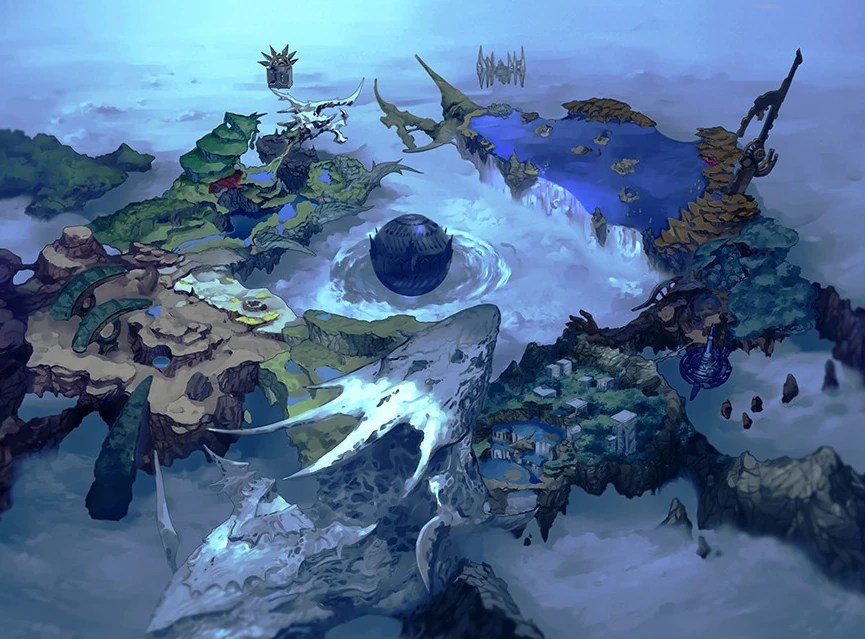
A composite of corpses of the Titans from the first 2 games, Aionios is a vast land filled with grand vistas and stunning scenery. Explorable areas are expansive, and exploration feeds into progression nicely. Collectables scattered throughout the world can be used to make gems, cook meals or complete side quests. Completing side quests and filling Collectopaedia Cards with the collectables you find will improve your standing with Colonies, granting you various bonuses, many of which make traversal smoother. Traversal Skills in particular are reminiscent of upgrades in a Metroidvania, as they incentivize you to go back to areas you’ve already been to to reach locations you previously couldn’t without them. If you go off the beaten path, you’ll almost always find something useful, such as a Ferronis Hulk that can make rare items with a Fabricator, a container with a powerful accessory, or an optional Hero Quest that can unlock a new class for the party. Large landmarks are almost always visible off in the distance, keeping the interest of getting to them in the player’s mind while exploring. There’s a lot to do and see, and I always enjoyed entering a new area and thoroughly exploring for hours without even progressing the main story.

The environmental storytelling is quite strong. The decaying bodies of the Titans are more than just a cool world design choice; they’re a reminder of the impermanent nature of all things, no matter how great in size or power. It makes sense that most of the Colonies are hidden away and optional, as they need to find places that won’t risk being discovered by the enemy. The massive amounts of visible destruction of the world show just how much Annihilation Events have been eating away at it, truly conveying that this world is dying.
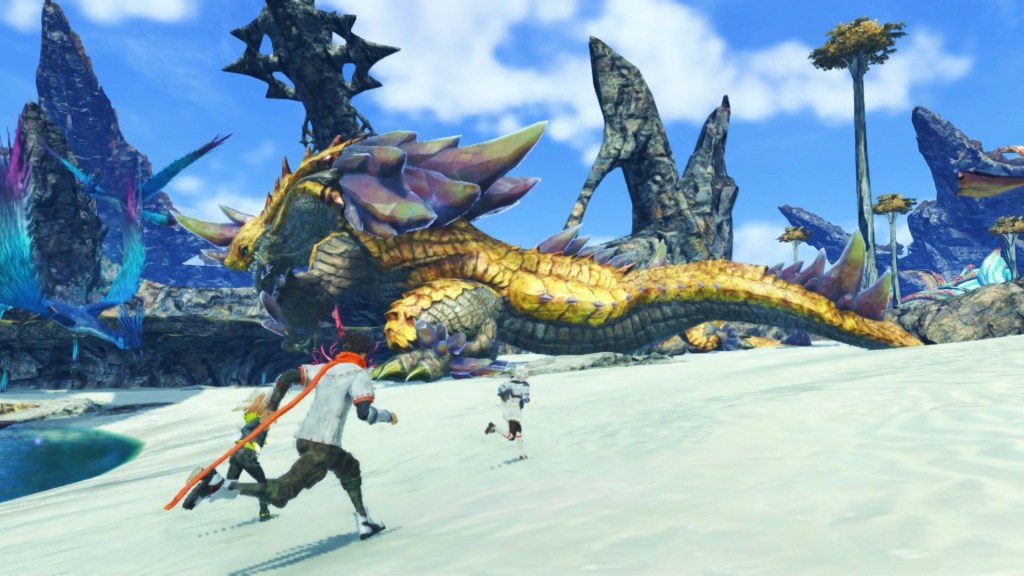
Despite how fun it was to explore, I couldn’t help but notice that the overall movement speed of the playable characters is lacking, especially considering how large many of the explorable environments are(5 times larger than the total walkable area in XC2, according to the development staff). Yes, you can increase your run speed by increasing your affinity with Colonies, but I believe there is a much more fun solution to this problem- bring back the mechs from X already! There isn’t even an excuse for 3 not having any this time, since the Levnises used by both Keves, Agnus and the City could have easily taken their place, and you already use the Boundary/Bravery to traverse Erythia Sea. I may not have played X, but from what I’ve heard it perfected movement and exploration, and the series hasn’t seemed interested in trying to reach those heights again.

- Quests & The Affinity Chart
Per Xenoblade tradition, XC3 has a ridiculously large number of quests, and for how many there are they’re consistently pretty good. Collectopaedia Cards take the place of menial fetch quests, which allows standard quests to have more of a focus on telling a story rather than filling a checklist. Not every individual storyline or quest-giving NPC is compelling, but they do a solid job at enriching the world and exploring the cultures and communities of the various Colonies and the City. How you acquire some quests also helps make the world feel lived in; you can get them by finding question marks on the map, while other times you’ll see a little “i” above a character’s head, which means you can overhear that character’s conversation. The party then discusses the conversations over a meal before deciding whether or not to take the initiative and help. Other times you’ll get some fun dialogue(that usually involves teasing Lanz) or sweet character moments. While this way of doling out quests can be cumbersome, it feels much more organic than just talking to an NPC once and then starting their quest, and is a nice way of including more relaxed moments of downtime, which are important in a world as oppressive as Aionios.
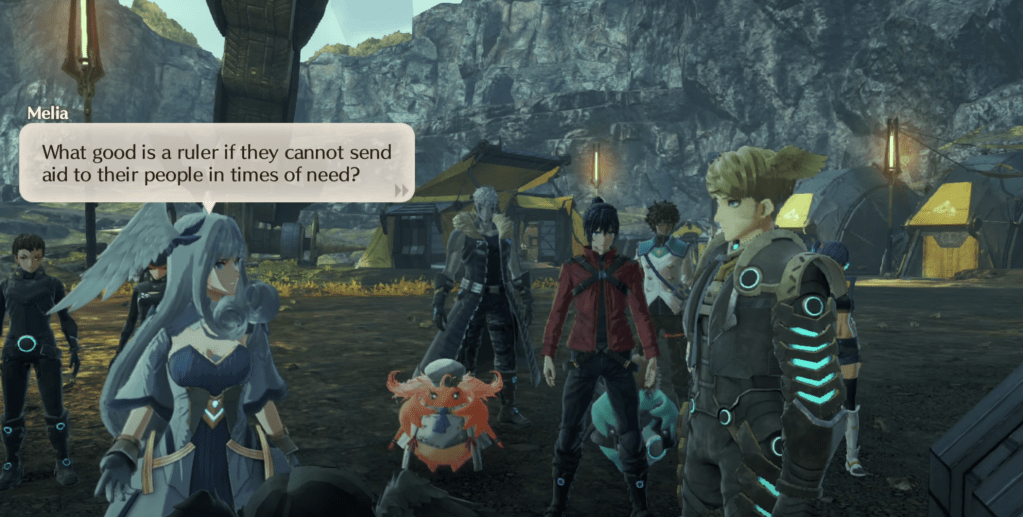
Hero Quests, Side Stories and Ascension Quests are a highlight. Typically voiced, they provide a window into the lives of the playable characters and Heroes, and are some of my favorite quests in the game. They more directly show the ways the Ouroboros are changing the lives of the people they meet for the better, and add depth and characterization to the Heroes when they otherwise don’t participate in the main story.

The Affinity Chart from XC1 makes a return, with a focus on affinity between the party as a whole and Colonies. I’ve been a fan of XC1’s affinity system ever since I first played it. It makes NPCs feel like genuine people with relationships and personalities outside of their interactions with the playable characters, and shows that your actions make a difference in their lives. It’s especially appropriate in this game, as community is an important theme throughout the main story and optional content.
- UI
There is one word that can accurately describe XC3’s menu design and overall interface- polished. If you like to switch up your loadouts constantly without using auto-build like me, then you’ll be spending a lot of time in the various menus, and XC3 thankfully makes it very smooth and easy to use. Information is laid out in a way that can be easily understood by any series veteran or new player. There are convenient flourishes like instantly being able to go to a quest destination marker on the map when you press +, being able to favorite accessories to make them easier to find, and an entire tutorial system that lets you practice combat mechanics in virtual mock battles. And like a lot of 3’s gameplay mechanics, it’s all diegetic, with the characters Irises being the in-game UI. It even extends to the simple act of saving your game, which is Mio writing in her notebook. Best of all, tutorials don’t disappear forever after appearing only once like they did in XC2! They appear pretty frequently in the early game, but also unlike XC2 they can be turned off. Xenoblade 2 tutorials suck.
Overall, Xenoblade 3’s gameplay was mostly a blast, with some of the most fun and rewarding JRPG combat I’ve experienced in quite some time. It builds on the foundation established in the previous entries in interesting and fun ways and even now, at over 200 hours including my time in Future Redeemed, still has me coming back for more.
Audiovisuals & Performance

Was there ever any doubt that this game’s music would be good? It’s a Xenoblade game, of course the soundtrack is incredible. Rest assured that whenever this game wanted me to feel something, the rich, fully-orchestrated music made me feel it twofold. At around 140 tracks including short jingles, the soundtrack is just as massive as the game it’s a part of, and nearly all of it is sublime. I especially like the way that shinobue flutes are used for diegetic music that’s played by the off-seer characters, but also just as beautiful music to suit the tone for dramatic or moody story moments. They also work surprisingly well in many of the more intense battle and area themes.
Areas that are composites of locations from the first two games have plenty of leitmotif callbacks to their respective themes, such as Millick Meadows combining the melodies of Gaur Plain with Gormott or Elaice Highway remixing Hidden Machina Village/Fallen Arm. This also extends to themes in cutscenes, such as The Weight of Life being this game’s version of Engage The Enemy from XC1 and Counterattack from XC2. It’s a great way of referencing the previous games for returning players without leaning too hard into indulgent fanservice. There’s also really cool details that most people may not even notice, such as the Moebius Battle theme going in a ∞ shape with headphones on, or Kenji Hiramatsu doing all the music associated with Keves while ACE did all the music for Agnus.
Some of my favorite tracks include: A Life Sent On, Melody of Rebirth, Ribbi Flats, Erythia Sea, A New Life Is Born, Queen of Keves, Queen of Agnus, Agnus Colony (Night), Erythia Sea, Drifting Soul – XBC3 Mix, and all the Moebius battle themes.
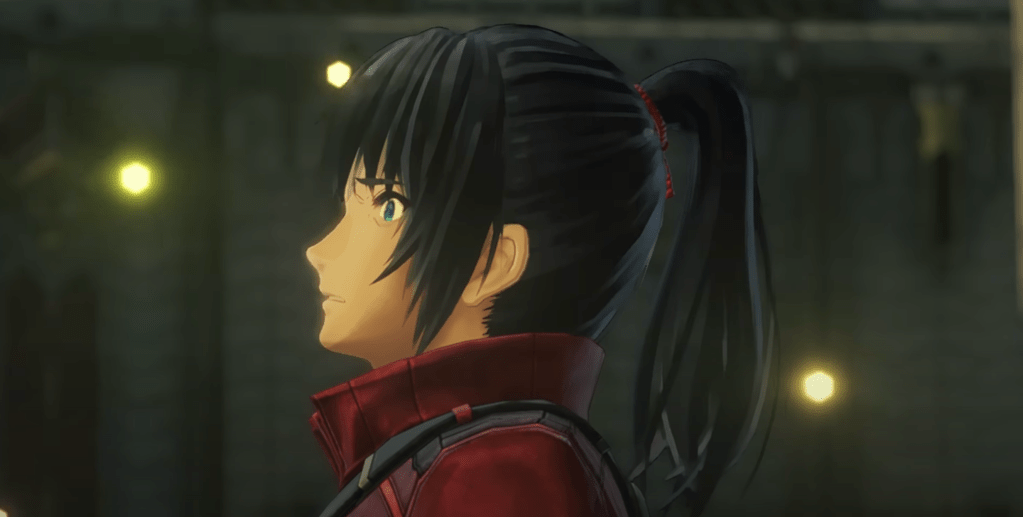
The high audio quality also extends to the excellent English voice acting, a massive step up from XC2’s wildly inconsistent performances. Every important character is well-cast, and the overall quality of the voice direction is high. The hand the voice directors and actors had in increasing my enjoyment of the story and attachment to the characters really can’t be overstated. They nail both the big dramatic scenes as well as the mundane ones in equal measure. I want to give special mention to Harry McEntire and Aimee-Ffion Edwards, who absolutely steal the show as Noah and Mio(and N and M). The way they portray these two characters with such empathy and grace is captivating, and it’s genuinely hard for me to imagine anyone else portraying them better.
Another appreciation I have for XC3’s voicework is the variety of English accents used for the voices of the characters. While it’s true that XC2 did it first, having characters who don’t just look different but also sound different is a nice touch that feels very in line with the themes of the story, with how people who are foreign to each other, “xeno”, come together to defeat a common enemy. It makes Xenoblade stand out among its peers, since most JRPG localizations are content to just cast everyone with American English voices.

Xenoblade 3 is a beautiful game, but it is also a beautiful game trapped on hardware that was aged before it was even released, and it shows. The awe-inspiring vistas are undercut by lots of shaky draw distance, with grass noticeably filling in as you move and the occasional tree popping in in the distance. Textures for many of the environments, particularly for the rock faces that tower over many of the areas, have a warping effect, as the far away low-res texture is replaced by a higher one as you get close to it. It’s quite hard to unsee once you start noticing it. It’s the same with in-game clouds, except they stay low res-at all times. Lastly, the game crashed once and there were multiple points throughout my playthrough where the audio would cut off for a second. Possibly the death throes of my aging 2017 Switch, but still a problem I haven’t noticed with any other game I’ve recently played on it.
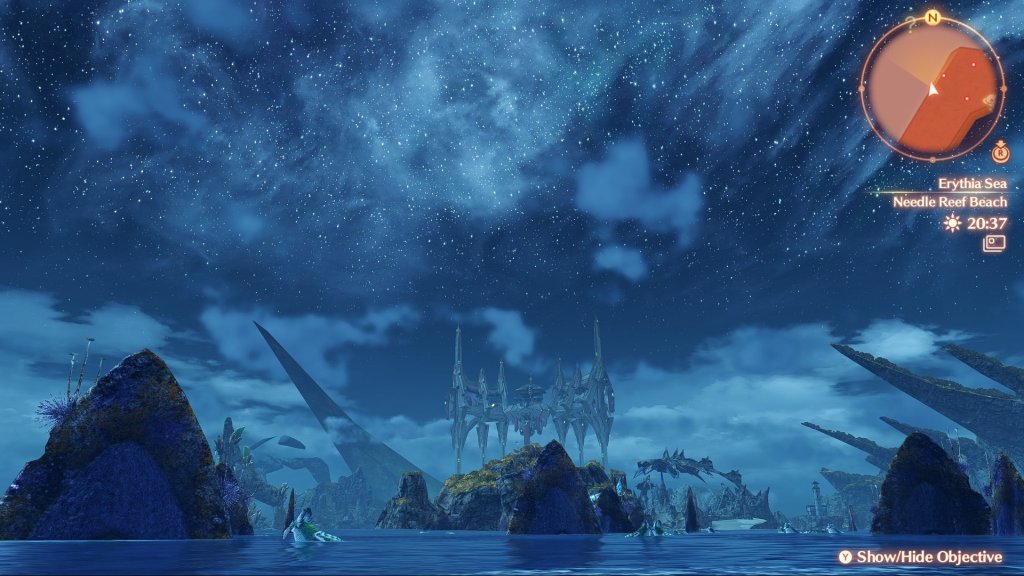
Despite my complaints, I still think it’s by and large an improvement over the previous Xenoblade games on Switch. The new upscaling technique for the resolution makes it look consistently sharper than XC2 or DE in both docked and portable mode, and impressively enough, I never noticed any dips in framerate while I played, despite how busy combat can get. It easily has the best looking character models and texture work in a Xenoblade game to date, and the long view distances and impressively huge environments make most of the areas a sight to behold. Xenoblade has always had stellar environmental design, and XC3 is no exception. I quickly lost track of all the times when I would just stop and take in the beauty of Aionios. I’ll always believe that a game is at least doing something right if it can get me to do that. It pushes the Switch to its limits, but manages to mostly work well within them. Monolith Soft has clearly mastered making high quality visuals on low end hardware, and when it looks good, XC3 easily has some of the best visuals on Switch.
Story, Characters & Themes

A return to the style and tone of the first game, the story of Xenoblade Chronicles 3 is in many ways the thematic culmination of the trilogy. Xenoblade 1 represents the future, with Shulk’s visions of future events and the final act of claiming their future from Zanza. Xenoblade 2 represents the past, as the history of Alrest shapes the present events, such as Amalthus losing his mother, The Aegis War and Klaus’s past actions that lead to the creation of Alrest. Xenoblade 3 represents the present, with the endless fighting for an eternal status quo where the soldiers of Keves and Agnus lose their memories of the past upon rebirth and have no future while Moebius wishes to live forever in a world locked in stasis. This even applies to the two new main gimmicks of Xenoblade 3, Lucky Seven and Interlinks. Lucky Seven is a gift from Melia, a sword meant to destroy the endless now and carve a path to the future. The Ouroboros Stone is a gift from Nia, which forces those granted its power to confront their pasts, as the memories of Interlink pairs are shared while Interlinking.
Xenoblade 3 is a revolutionary tale, a love story, a meditation on life, death, legacy and what it means to be truly present all wrapped up in an insanely ambitious and memorable package. It exercises restraint compared to the maximalist approach taken in 2, with just as many quiet scenes of contemplation as there are big dramatic crescendos. And more than anything, it’s not afraid to subvert the player’s expectations when it wants to. After all, Xenoblade 1 and 2 were about saving the world. This time it’s about destroying it.
Of course, it’s still a Xenoblade game. There’s more than enough religious iconography and anime melodrama to go around, per usual. But does it stick the landing? We’ll get to that. We have plenty of time. Or at least, enough time.
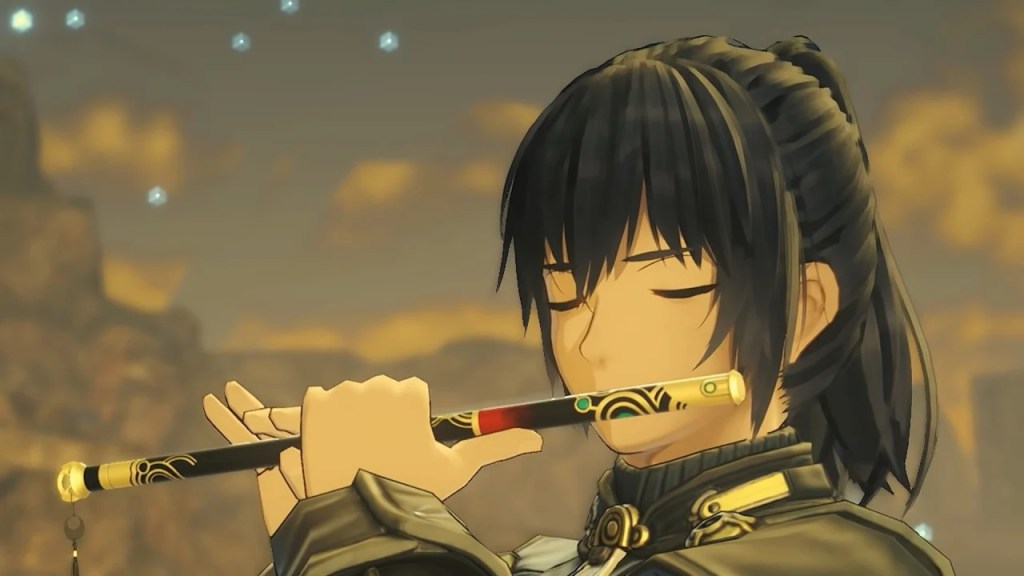
XC3 starts off with an immediately intriguing premise. Two nations, locked in an endless war with each other, fighting to live and living to fight. The battle between Colony Sigma and Colony 9 is reminiscent of the opening of XC1, with a focus on a large-scale battle between two factions that have waged war for time immemorial. Though also like XC1, there are enough mysteries to silently inform the player that there is much more going on behind the scenes than what meets the eye. Who are the mysterious figures looming over the battle? Why does the protagonist already have his Xenoblade from the start, unlike Shulk and Rex? And if the worlds of Bionis and Alrest were at peace at the respective endings of their games, why is their synthesis defined by so much brutality? We will soon learn the player isn’t the only one asking questions.
Noah is very quickly established as a thoughtful person who feels a degree of apprehension towards his circumstances. He questions whether or not all the senseless killing Keves and Agnus partakes in truly benefits anyone, as well as who decided that this is how things should be. His role as an off-seer makes it feel natural, where empathy for his enemies and allies alike is practically a requirement. It’s smart setup for numerous things that will happen later down the line, especially since he eventually takes the lead in tearing down the structure of the world that he always questioned.
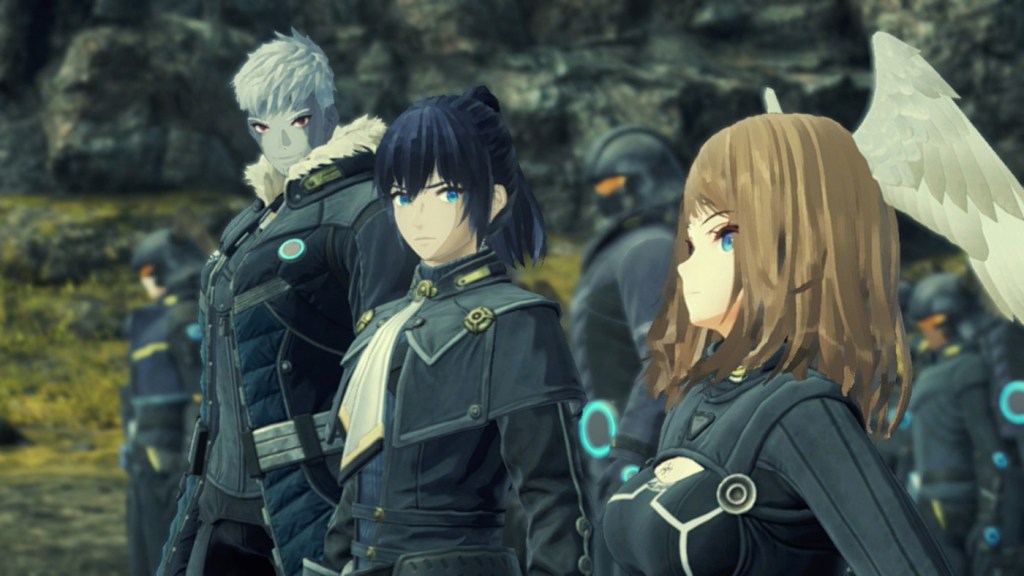
Also well set-up is his dynamic with his friends, who are already familiar with his empathic ways. They seem archetypal at first, but have a lot more depth than it seems at first. Underneath all the sass Eunie is quite considerate and Lanz is unexpectedly introspective and insecure. Mwamba is… he’s just kinda there. The early scene where they all bathe together feels like a cheeky way of acknowledging that there won’t be any cringey attempts at fanservice this time around. It’s a genuine moment of retrospection, and also a subtle way of showing that these characters don’t have any kind of sexual awareness or desire(yet). The story truly starts when the mission to intercept the City airship begins, and the worlds of Noah and Mio collide once again.
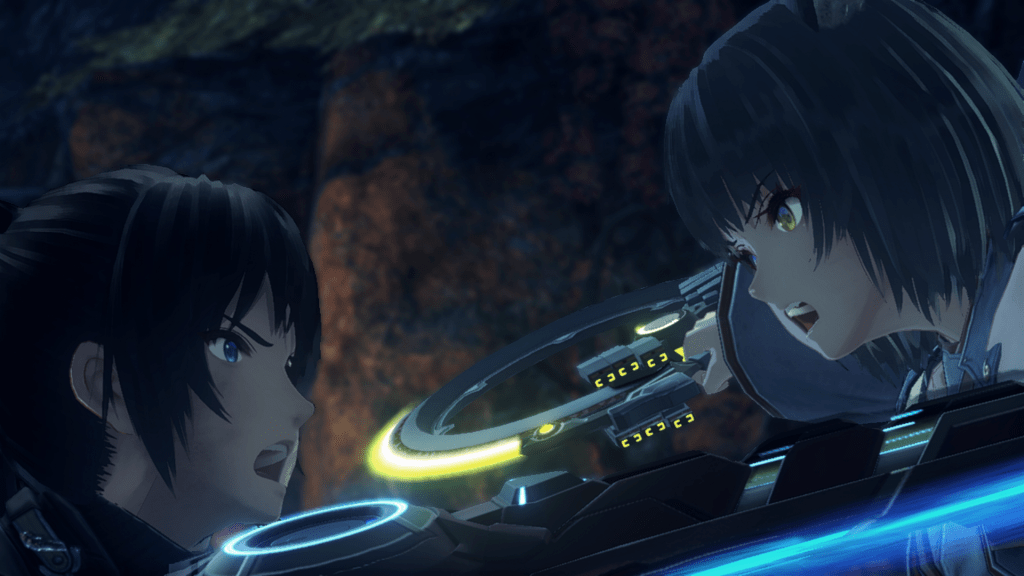
There’s a lot to love about this sequence. The fight choreography, particularly between Noah and Mio is stunning. There’s a ridiculous amount of cool details and foreshadowing packed into almost every moment; Guernica points at Noah’s heart while he’s about to say who the real enemy is, Noah gets extremely upset over Guernica(his descendant!) being attacked by D & J, Joran doesn’t talk so as not to spoil the reveal like how Mumkhar doesn’t talk during the attack on Colony 9 in XC1 and D even talks to him for a split second. And yet, this isn’t even my favorite part of Chapter 1. It’s what comes after.
In the aftermath of the battle, when unity becomes the best chance at survival for the Ouroboros, they introduce themselves and talk about their hobbies before deciding what to do next as a newly-formed group. They are wary and still have a degree of apprehension towards allying with their sworn enemies, but slowly and surely, you can see the walls between them begin to crumble. Who would have thought that the people you’ve been taught to despise and kill without mercy your whole lives enjoy mundane pleasures like working out and playing music just as much as you do?
This kind of sincerity is consistent with the character writing throughout the game. Since XC3 doesn’t have Heart-to-Hearts, many of the cutscenes in the main story take their place by making sure there’s no character that fades into irrelevance or runs out of things to do as the story progresses; Noah and Mio may be the main protagonists, but I felt that each of the playable characters were equally important to the plot and given enough focus and characterization to make them stand out. Many of my favorite scenes weren’t limited to just the dramatic climaxes or tear-jerking deaths, but simple scenes of characters confiding in and connecting with each other. The overall quality of the writing is strong, and I found myself getting deeply attached to the Ouroboros kids very quickly. They really do have the hallmarks of a great JRPG party, in that they feel like an organic friend group who go on adventures and fight together not just out of necessity, but because they truly care about each other that much. To understand what makes the development and internal struggles of the protagonists so great, we first need to understand the force antithetical to development itself- Moebius.

If there’s one question XC3 wants you to ask, it’s this: Who writes the rules, and what were their intentions while writing them? It examines the ways in which systems of oppression that benefit the few at the expense of the many take root in the world, and the otherwise completely understandable fear of change and uncertainty is twisted, corrupted and used to exploit people while preventing meaningful progress, all while masquerading as “how things are meant to be.” It’s quite anti-capitalist and anti-fascist at its core, exploring the mindset of the ruling class and the delusional performativity they use to justify their various atrocities. The war between Keves and Agnus is never ending like the “limitless” growth mindset, all to the benefit of no one except those who sit at the top and write the rules. The representation of this in XC3 is Moebius, one of the most divisive parts of XC3, and for understandable reasons. Most of the Consuls are cartoonishly evil with little depth or sympathetic qualities to make them more human(N, M, Shania, Joran, Crys and Triton are the exceptions). Z, and in essence Moebius as whole, is more of a concept than a character, literally, since he is the manifestation of humanity’s fear of change and moving forward into an uncertain future. Despite this, I still think Z and Moebius have a lot more going on beneath the surface than it initially seems, even beyond the social commentary.
Moebius is an interesting case of villains that are purposefully shallow to accentuate the flaws of their so-called perfect state of existence. Z giving the Consuls mostly free reign to do as they please so long as they don’t alter the state of Aionios allows them to treat the war between Keves and Agnus as depraved entertainment, toying with people’s lives like they’re part of a sick game to be played. They are haughty and proud, believing themselves superior to the humans they torment and enslave every day. The black and white aesthetic of Keves and Agnus symbolizes many things, but it is reminiscent of chess, with the soldiers as the individual pieces. We even see the Consuls playing with chess pieces representing them in the final cutscene of Chapter 3. The world they’ve created is staggeringly simple, black and white; Kill or be killed, fight or die.

Z watches the action-packed drama unfold while sitting comfortably in his amphitheater, hidden away deep in the heart of Origin. He presents himself as a refined individual, posturing smugly while dressed in a suit, arrogance dripping from his every word. To Moebius, the self is all that exists, and if that is the truth, why bother thinking of anything but yourself?
And yet, why is it that they stand on a stage, wearing masks and homogeneous armor to hide who they really are? Not even Z is exempt from this, as his face is cracked, a countenance that betrays something barely contained, something that defines the entire existence of Moebius: fear. They are actors, living in a hollow existence faker than the “toys” they play with. Moebius’s confidence is all just an act they use to mask their fear and pain. The Consuls lack variety because they fear standing out and showing their true selves, it’s why they all wear identical armor that hides who they are. Every Consul holds up a fragile persona that hides away their fears and childishness. K, O, P, D and X all show their fear of death once their persona is broken, N despises himself deep down and fears losing control, M is a shell of who she was because of how much she hides her feelings. To them, individuality and vulnerability is weakness instead of what it truly is; strength.
Z deludes himself into thinking nothing is wrong with the world and that this is what is best for humanity, locking it into an eternal stalemate where “everyone can become a winner given the time”, even though he has created a world where everyone loses, because Aionios is dying and not even Moebius is truly eternal.

What makes Z a great villain is that each and every one of his actions and motifs is used to convey his true lack of agency and superiority, as well as his cowardice and hypocrisy. As the collective will of humanity, he has no real will of his own, no freedom or power to choose, and so he hides in his amphitheater, watching the suffering of others to distract himself from the existential dread of the world’s inevitable annihilation. His dialogue is always reactionary, typically reflecting the innermost temptations and darkest desires of those he talks to. He never forces anyone to become Moebius; even if the choice is deeply unfair and cruel, he still gives them the choice to re-enter the cycle or give in to their fear and join him. Z’s line about toying with lives because it amuses him is a farce, a commentary about how real-world people use depraved entertainment to distract themselves from the end of the world.
In his world, hiding yourself, both figuratively and literally, and avoiding your problems is deserving of applause. Aionios is a world built on lies and deception, and the biggest lies of all are the ones Z tells himself.
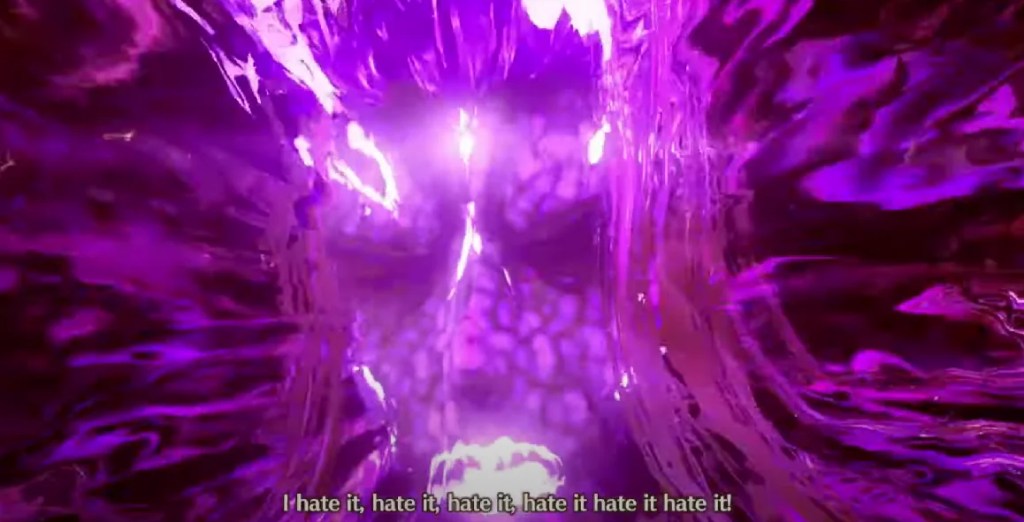
Despite his composed persona, his true self is anything but refined. When Z is confronted by the party before the final battle, he asks them question after question not because he cares about their answers, but as a way of challenging their beliefs and making himself seem superior and in control. But when the amphitheater is destroyed and his true form is revealed, he asks them why they move forward out of genuine desperation. He has devolved into a mess of fear and hatred, childishly babbling about his anathema for the world and lashing out at his own role in Aionios. As he says, when you cannot choose, what then? Who will be there to soothe you? No one was there to soothe him. The cure for such despair? Total oblivion. When the mask is shattered, this is all that’s left.
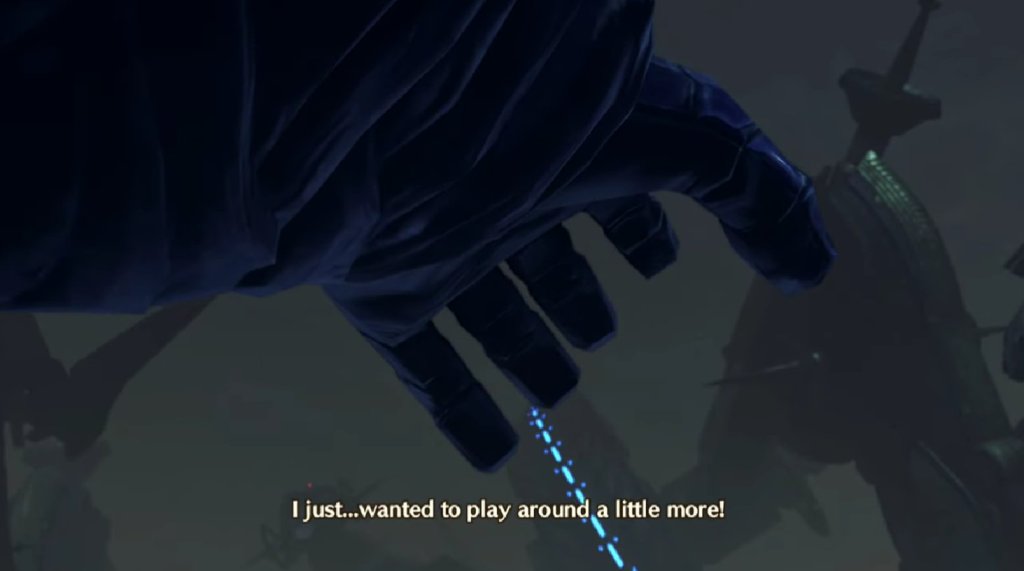
Much of the pathetic pettiness of the villains is a commentary on the emotional immaturity of humans and their failure to develop, just as much as it’s about the failings of the wealthy and powerful. They throw temper tantrums when they lose, stop anyone in Aionios that isn’t from the City from aging or living past 10 years, treat lives like toys in a game and even stop time right before Melia’s birthday in the opening cutscene. They are analogous to children refusing to grow up.
In contrast, the journey of the protagonists is in many ways about just that- growing up. It’s a coming-of-age story about moving on from the past while facing the future. All six of them in some way overcome and confront some sort of fear or weakness that holds them back, all while learning about life, the world, themselves and each other.
Despite his calm and collected demeanor, Noah is deeply afraid of taking lives or losing anyone. His role as an off-seer centers around him imbuing death with meaning, yet he can’t understand why people like Crys, Ethel, Cammuravi or Joran can die content, with a smile on their faces. He frequently hesitates to use Lucky Seven, fearing the consequences of what could happen if he did so, fearing the future. N is the extreme of all of his flaws, his “shadow”, who essentially holds M hostage in her Moebius body against her will. M’s death and the powerlessness he feels in that moment is the wake-up call he needs to move on and realize the meaning of the smile, draw the Sword of The End/Origin, and eventually let Mio go when the worlds separate in the ending.
Mio became an off-seer against her will, but eventually came to appreciate it as an important part of life in Aionios thanks to what Miyabi taught her. She feels survivor’s guilt over Miyabi’s death, and believes making a mark on the world for Miyabi’s legacy is all she has. She’s forced to reckon with the fact that her time left is dwindling and there’s only so much she can do before she’s gone forever, hiding just how scared she really is about dying. Through her journey with Noah and M’s sacrifice, she realizes the true value of her life, and that she wants to be with him, no matter what, until the day comes when they must part ways.
Eunie is haunted by her death at the hands of D, constantly reliving it and hiding her trauma from her friends. But when she overcomes her fear of D during the fight at Keves Castle she’s able to outsmart him and survive the battle, destroying the Annihilator. Her later conversation with Monica helps her accept that the Eunie that died isn’t her and no longer exists, allowing her to move on from the past.
Taion’s miscalculation cost the life of his mentor Nimue, and he has allowed that mistake to define him ever since, becoming a timid person who distances himself from the party and is afraid of making the same mistake again. When forced to directly confront his past through the battle with Colony Lambda, he is able to find the courage to take his first step and trust in himself and his allies, becoming someone Nimue would be proud of.
Lanz’s confidence is an act to compensate for his perceived weaknesses, hiding his mental and physical scars so as not to trouble his friends. He wasn’t able to be strong enough for Joran, and struggles with finding a purpose once he is freed from the Flame Clock, as his Homecoming was his reason for fighting for so long. By seeing Joran again and realizing there was meaning in his sacrifice, he realizes his purpose is to protect people, and to never let what happened to Joran happen to anyone ever again.
Sena’s lack of self esteem causes her to copy others in an effort to be accepted, stifling her true self. When she sees that Shania has more or less gone through the same things she has, she denies the similarities between them, refusing to acknowledge that darker part of herself. But through the support of her friends, Mio especially, she’s able to finally show her true colors and find the confidence and motivation necessary to take down Moebius.
Each and every one of them has some sort of flaw or weakness they initially hide, before eventually overcoming it by growing as people. It shows that, if they were put in the position to do so and given the impossible choice, they would have chosen the endless now too. The prison scene alone shows just how naturally and easily anyone can become Moebius. This all comes to a head in the final battle, when Z shows the party their past mistakes and trauma on the amphitheater screen. When he previously did this to characters like N and Joran, it drove them to despair and made them choose the endless now, taking advantage of their fear and pain. But because the party has grown and experienced so much, it strengthens them instead, allowing them to break free of Z’s chains. When trying to make the party lament their past doesn’t work, Z splits them into two groups based on whether they’re from Keves or Agnus to make them fear the future, one where they will have to separate and become unable to be together. But they aren’t alone. The Heroes whose lives they permanently changed for the better are at their sides, ready to face the future with them. Even in a world that discourages growth, even though the threat of the end hangs over their heads like a guillotine suspended by fraying ropes, they still choose to fight to the bitter end. They hate the world like Z, but unlike him, they’re willing to change it for the better and use their pain and fear for good. Moebius is more than a group of villains to beat, it is a flaw of the human condition that must be overcome.
The coming-of-age aspect also extends to one of the central themes of the game- life. For a story centered around so much death, one that takes place in what is essentially a colossal graveyard, XC3 is far more concerned with life, and what we leave behind when we die. My favorite use of symbolism that represents this is the dichotomy between Moebius and Ouroboros. The snake eating its tail represents the cycle of life and death while the Möbius strip is infinity. The ideology of Moebius is that all that exists is the self; their symbol means eternity and if they die there’s nothing left. Ouroboros on the other hand believe in preserving a different kind of infinity, one where they can leave a legacy so that even if they die, their ideas, hopes and dreams will continue on through those that succeed them, and that old life will pave the way for new life. They fight for a world where death will mean something. That’s the the point of off-seeing, which is for the living, not the dead. It’s a celebration of life and is how we imbue death with meaning.
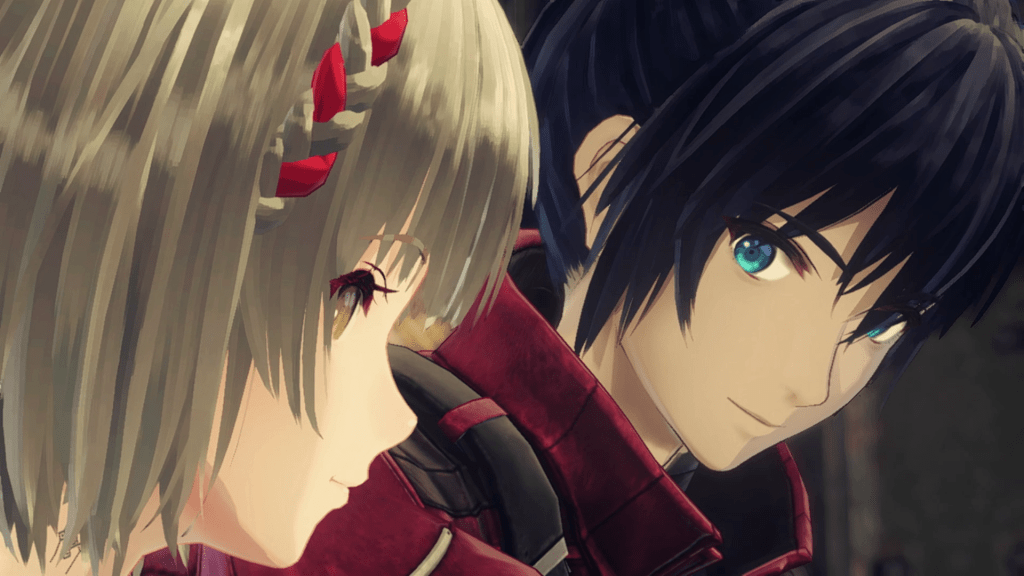
I think this is why a lot of the content that takes place in the City is some of my favorite in the entire game. When the party meets the people of the City, they learn about the various stages of life, family, and love. The magic of watching these kids learn that humans have the innate ability to create life after spending their whole lives only interacting with the world through violence really can’t be overstated. Even beyond just procreation, they learn about the act of creation in general. Books, juggling, music, the beauty of making or expressing something you can imbue parts of yourself with, and then sharing it with others.
Of course, it’s not all sunshine and rainbows. Shania’s downfall and the conservatives show that the City isn’t some paradise completely disconnected from the problems of Aionios. Legacy in XC3 is usually portrayed as a positive thing, but Shania’s story shows how it can be taken too far, as the obsession with status provided by the Founder House names is what drove her into becoming Moebius. Even in a place meant to show what life is supposed to be like, there are still people who cling to the past while refusing to face the future. They allow the present to stagnate and cause many to suffer, even if they don’t turn into freakish purple monsters that harvest the life energy of soldiers they force to fight and die endlessly. It’s a reflection of the problems of the real world.
XC3 is also about community, unity and solidarity just as much as it’s about exploitation and stagnation. It shows that maintaining a functioning community is hard. There is a great deal of attention put on the various problems Colonies have to tackle just to stay afloat after their Flame Clocks are broken and they can no longer receive support from their respective Castles. There are food shortages, trade disputes, and many of the NPCs struggle with their uncertain new reality, trying to get by in a world where nothing makes sense anymore now that they’re no longer protected from choice. Whereas the Colonies had food and supplies sent to them from their respective Castles before(made with prison labor under the threat of death if the prisoners disobey or don’t meet a quota), now they must learn to cultivate it themselves.
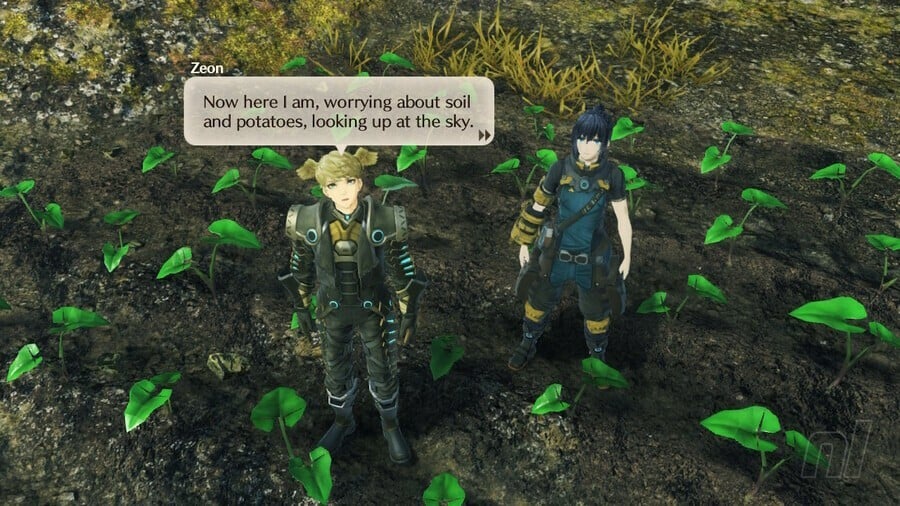
But it forces them to grow and change, exactly what Moebius fears the most. They now have the freedom to move forward as a collective, the freedom to choose their future. Many of the Colonies begin to work together after being freed from the Flame Clock. My favorite example of this is in the quest Reasons To Evolve. In it, Colony 9 collaborates with Colony Tau to learn how to properly take care of crops. The quest is purposefully tedious. The potatoes die multiple times forcing you to collect them again, you have to make fertilizer, defend the fields from monsters, manually pull out bad stems and wait for rain. It shows how difficult it is to raise crops, to cultivate life. But through the simple act of growing potatoes, Zeon and Juniper form a bond of mutual benefit and trust, and Colony 9 and Tau have made allies of each other when they were sworn enemies not too long ago. Life is hard, yes, but it’s less so with the help of others. In the end, the ones who want endless conflict have to control every facet of society, and once that control is lost most people just want to live their lives in peace.
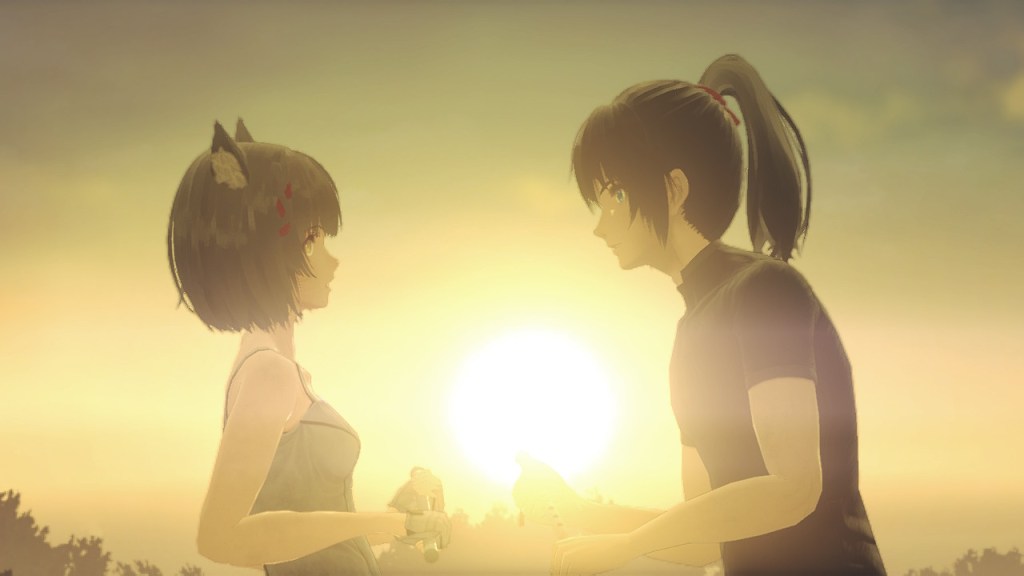
Unity is strength, and it is particularly strong in the hands of the Ouroboros. By gaining access to each other’s classes and Interlinking, they are put in each other’s shoes(and shirts!) and gain a better understanding of each other and themselves. But there is one pair that easily stands as the game’s shining example of more than just the power of unity, but of love: Noah and Mio. They’re lovely characters and protagonists who drive home the themes of the story beautifully, and I absolutely loved seeing their burgeoning relationship develop over the course of the story. Their flute playing is who they are as people, they sound beautiful on their own but become truly captivating and complete when playing together.
However, what I find to be the most interesting, rather than emotionally resonant, part of their dynamic is how N and M reflect the worst parts of their relationship, and how easily they, particularly Noah, could have gone down the same dark path.
There are multiple hints towards Noah’s possessiveness over Mio before the events at Agnus Castle. He doesn’t quite understand what love is yet, but there are plenty of moments where he gets very defensive of her. It’s not so bad that he disregards her agency, but the scene in Maktha Wildwood shows that even someone as composed as him can be insensitive towards her feelings. Enter N, all of Noah’s flaws x100. He is in complete denial, choosing to believe M is still happy when he knows deep down she is suffering immensely. All the scenes when he castigates Noah is him just projecting his repressed self hatred, desperately trying to convince himself that he is above the weakness that got his Mio killed so many times. N being so unhinged shows how much of a broken mind he’s operating under, and knowing this makes the scenes where he gloats about his existence as Moebius quite pathetic and sad in hindsight. M also represents Mio’s unfavorable qualities, as she(very understandably) completely closes herself off from N after becoming Moebius, similar to Mio hiding her fear of her impending death in the early game. This all comes to a head when M switches bodies with Mio, sacrificing herself and leaving the future in the hands of Noah and Mio.
The twist with M and Mio is amazing in how it completely changes the context of the past hour’s worth of cutscenes. When M first uses her power and then cries, that’s actually Mio in M’s body crying for her other self. The M fight goes from an intense battle against a sadistic and manipulative Moebius to Mio expertly trolling her friends with her brilliant acting. Even M’s heartfelt speech to Sena and Noah in prison take on new meaning, with the heartbreaking “my Noah” line, while still true to Mio’s feelings, being more so about how M feels about N. He isn’t the Noah she fell in love with anymore. She wants so badly to be with him, to keep seeing and learning so much more together. To walk their shared path, hand-in-hand. But all that’s left is an unrecognizable shell of a man so far-gone that her death is the only way to get him to realize what he’s done. How fitting that this is what she says while in prison, as imprisoned is exactly how she felt. Even knowing that M dies instead of Mio, the entire prison sequence is still so devastatingly beautiful that it makes me misty-eyed just thinking about it. It makes M’s sacrifice hit so damn hard, so much so that I’m mostly willing to forgive the massive cop-out that is this twist. It shifts the tragedy of this sequence from Noah and Mio to N and M, victims of Z just as much as anyone else in Aionios.
Even though Noah is more than willing to tell N he’s full of shit, he still concedes that had he been put in the same position as him, his past self would have made the same choice. Noah’s admission that he was simply lucky to have met so many people that helped him grow and change so he could avoid becoming the embodiment of regret like N is such a great character-defining moment for me, showing just how far he has come and matured in the short time since he became Ouroboros. Rather than letting all the death and loss he’s experienced push him to despair, he instead chooses to use it to strengthen his resolve to restore the world and end the endless now. When the words of Noah and Mio finally reach N, he makes the same choice. To walk his own path of his own choosing, into the future. And with his and M’s final sacrifice to destroy Z for good, they leave that future in everyone’s hands, knowing that they all will reach the heights they were unable to in their stead.

The existence of N and M show how even the power of love can be corrupted and taken advantage of. Noah and Mio show it’s still so worth it. Their designs incorporate the red string of fate, they get pulled apart but are fated to find each other no matter what. Their relationship itself is even a metaphor for Aionios; they yearn for each other and strive to reunite no matter what. Even if they must be separated now, they will one day reunite. Their love transcends even their own lives. Anything that would stand in the way of it has no reason to exist. Noah and Mio’s relationship is one of the best parts of the story in this game, and will forever stand as one of my favorite fictional couples ever.
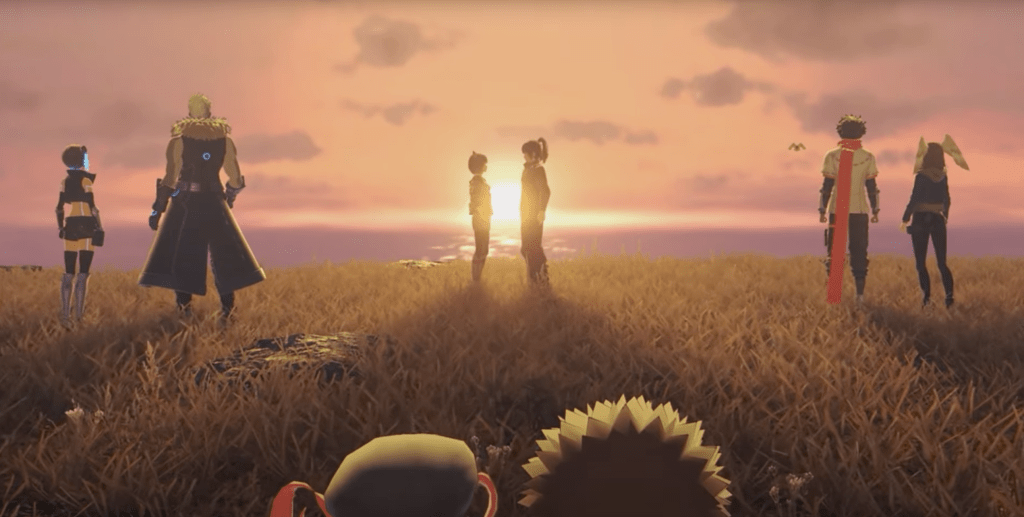
And thus, time moves again. The ending scene is one that will stay in my heart and mind forever. The sun sparkling on the water, heralding the beginning and the end of the world. A sunset and a sunrise.
Lanz and Sena promise to keep bettering themselves even if they can’t be workout buddies anymore. Their strength-training is no longer a way of compensating for their perceived weakness; it is instead, a genuine effort at self-improvement, one they will continue on in honor of their friendship.
Taion’s herbal tea recipe book is a lovely gesture that shows just how much these two have come to care for each other. In the past, he made her tea to comfort her after having seen her husk for the first time. Now, she can make that same tea for herself, because Taion is the one who helped her move on from her trauma the most. And of course, Eunie’s characteristic teasing of Taion is just her way of showing how much she likes him. He may be her fourth best bud, but Fourtune Clovers are her favorite after all.
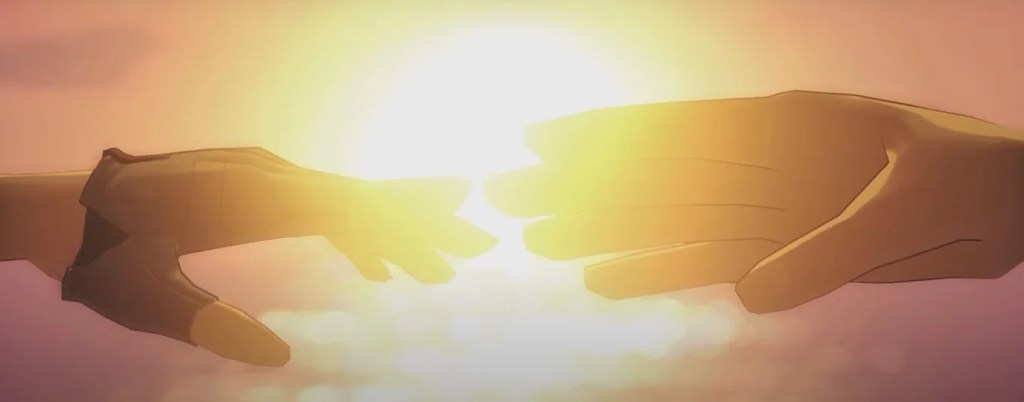
Noah and Mio earnestly thank one another, because they’re just so damn grateful to have been a part of each other’s lives. No matter how far apart they are, their love will always be as one. They won’t forget each other. Not ever. And to bookend it all with their kiss was enough to knock the wind out of me after playing for nearly 150 hours. It moved me.
I’ve seen some criticism for this ending not feeling complete enough, and that we don’t see the characters reunite in the last scene is unsatisfying. It’s not unambiguously happy like the first two games, and isn’t afraid to leave us hanging. And yet, that’s why I can’t help but love it so much. The brilliance of the ending sequence is that it puts us in the exact same position as the characters. We don’t want the worlds to separate if it means the characters can’t be together. We don’t want the precious time we spent with them to end. In that way, Moebius truly is a part of us all.
I respect it for being bittersweet, and not inherently demonizing the existence of Moebius. Even at the end, the party struggles to let go. It isn’t wanting eternity to exist that’s the problem. The problem is trying to force it to exist. And so we look forward into the uncertain future with hope in our hearts, hoping, knowing, that they will one day meet again. Even if we never see Noah, Mio and everyone reunite, this is enough closure for me.
Xenoblade Chronicles 3 is a rejection of the status quo. It shows that in order to change the world, you must first change yourself, no matter how scary or difficult it may seem. Evil and hardship will not disappear even if you choose to ignore it. There will always be people who leverage what power they can find to improve their own lives at the expense of others. But there are always going to be people, typically young people with an undying flame of defiance, who resist them and fight for a better future for all. That’s why you can’t just stay in the same place forever, because uncertainty is preferable to stagnation and failure begets improvement. If you can let go of the past, live in the moment and look to the future, the possibilities that stretch out before you will be endless.
The self is not all that exists, because the world will go on even if you die. And yet, that’s what makes it worth fighting for. We can’t stop time, but we can make our time worth it. That, I believe, is more than enough.
“This… is the truth of our world. Memories melt in the morning light, and then, a new day begins. Roads stretch out before us. So many paths. Which do you choose? That’s up to you. Sometimes, you might run astray. You’ll stop, maybe cry in frustration. But, you know, that’s all right. For the roads… They go on without end. So look up, face forward, toward your chosen horizon… And just… walk on.”
One Last You, Beyond The Sky Where We Belong

I’ve been thinking about my mortality a lot lately. Right now, the future feels so scary, uncertain and oppressive. So much of what is going on in the present feels like a reminder of the impermanence of our flesh as well as the very world we inhabit. There are powerful people who are benefitting off of the suffering of millions, and driving the world towards annihilation. Trying to grapple with the undeniable fact that everything ends at some point and that such evil will always exist, and it won’t go away even if we choose to ignore it, is something I know I will struggle with accepting for the rest of my life.
In that way, I can understand (N)oah, Shania, Joran and the Consuls as a whole for their refusal to confront a harsh reality and giving in to their darkest impulses. When you are placed in the most difficult circumstances imaginable, and given an impossible choice, what can you do except wish that time would just stop?
But Xenoblade Chronicles 3 offers a solution to this impossible dilemma. It is a reminder that during the short time we have in this world, we can make a difference. I don’t want to let this game stay as a passive experience that’s purely entertainment, and nothing more. It reminded me that I want to leave a mark on this world that makes it better, one that makes a genuine, positive impact on people’s lives, however small or insignificant it may be.
It really did come out at the exact right time in my life. Just like Mio, I actually started keeping a diary recently, and for similar reasons. I wanted to write about my day-to-day life not just so my future self could see how and what I was doing at the time, but also as a way of leaving something behind. Something people could read after I’m gone, that could give people an idea of what I was like. This website fulfills a similar purpose. I may not have written much for it so far(which I will definitely do my best to change!), but I hope that through my writing, I can pass on my thoughts and feelings on the stories that interested and inspired me. And I don’t want to stop there. Just like Noah, I want to write my own songs one day. I want to create stories that move people in the same way my favorite ones moved me. That too, is their legacy, one of all the artists, living and dead, who toiled to express themselves through their creations, a legacy that enriched my life, and made me want to do the same. Kind of like an Ouroboros.
Xenoblade 3 in particular touched my life so much that it actually helped me come out as nonbinary. I thought of how much more comfortable and certain life would be, identifying as a cisgender person. That it would be much easier to hide a part of myself that may not be accepted by everyone. But then I thought of how Noah, Mio and their friends were able to overcome so much by staying true to themselves, not letting their fear define them. Yes, it’s corny as hell to have something so personal and intimate to me be partially because of JRPG characters. But it really is proof of the effect that art can have on reality. This game made a positive difference in my life. What more could I want, really?
Seeing how far this series has come, through both the highs and the lows, as someone who was a fan of it when it was just one game has been a wonderful experience for me. It’s still kind of surreal that XC3 even exists, considering how close this series was to never even releasing in North America or getting any kind of follow-up at all. I’m so glad it does. It feels like a celebration of nearly all the games that came before it, a union of the best elements of every Xenoblade into one crazy, heartfelt and beautiful story I won’t soon forget. Tetsuya Takahashi has finally finished a full story saga unlike Xenogears and Xenosaga, whose stories remain unfinished to this day(though I know there are plenty of diehard fans who say otherwise). The scene in the ending where Noah throws Lucky Seven into the ocean feels like a metaphor for Takahashi finally being able to tell the story he wanted to tell, and that he’s ready to move on. This 2020 Famitsu interview shows that he was able to turn what he learned from working on Xenoblade into the themes of XC3, as it was in development at the time. Art imitates life, and life imitates art.
I don’t know what’s next for this series, but I can guess. Due to the teases in Future Redeemed(which I will also review in the near future), my guess is we’ll be getting some kind of Xenosaga re-release or continuation, or a sequel to X, though I could be wrong. Maybe we’ll finally see the proper fusion of the worlds free from the Endless Now in Xenoblade 4. Or it could be something entirely new. Who knows? The only certainty is that the future is uncertain. But that’s okay. So many possibilities stretch out before us, more than enough to guarantee my investment in whatever happens next for Xenoblade, or the Xeno series as a whole.
And as for me, I’m certain of just one thing.
We will meet again.
“As the morning sun rises, my lingering memories fade. I no longer see your silhouette. It’s too far gone into the haze. But hey… It’s all right. I won’t forget you. Not until we can meet again… I swear it.”
 Man of Few Worlds
Leave a comment